$3,293 to $3,859 is the national installed range for a gas tankless unit as of May 2026, per Homewyse. Electric tankless runs $1,642 to $1,925. A like for like tank replacement sits at $1,586 to $1,843. Every figure below names its source and, where the publisher states one, its date.
Hot Water Brief is an independent cost-research site. We are not a contractor and do not perform the work ourselves.
That matters here more than it sounds. The cost guides that dominate this search publish wide ranges with no source and no date attached to any of them. The table below is the same segmentation, with the attribution left in.
| Job | Published national range | Midpoint of that range | Dated |
|---|---|---|---|
| Replace tank water heater, 40 gallon gas | $1,586 to $1,843 | about $1,715 | May 2026 |
| Install electric tank water heater, 50 gallon | $1,920 to $2,254 | about $2,087 | May 2026 |
| Install tankless gas water heater, 8.5 gpm | $3,293 to $3,859 | about $3,576 | May 2026 |
| Install tankless electric water heater, 5.3 gpm | $1,642 to $1,925 | about $1,784 | May 2026 |
| Install tankless water heater, unspecified fuel | $2,791 to $3,236 | about $3,014 | May 2026 |
| Repair an existing water heater | $303 to $365 | about $334 | May 2026 |
| Flush and clean an existing water heater | $169 to $386 | about $278 | January 2026 |
| Remove and haul away the old unit | $84.87 to $267 | about $176 | May 2026 |
Source: Homewyse national cost calculators, dated May 2026 and January 2026 on the pages themselves. The midpoint column is arithmetic on the published range, not a separate survey.
One caution before you read any further. Those national bands exclude permit and inspection fees, sales tax, and general contractor overhead, which Homewyse puts at an extra 13 percent to 22 percent when a general contractor supervises the work. A quote that includes those items is not automatically higher priced, it is differently scoped.
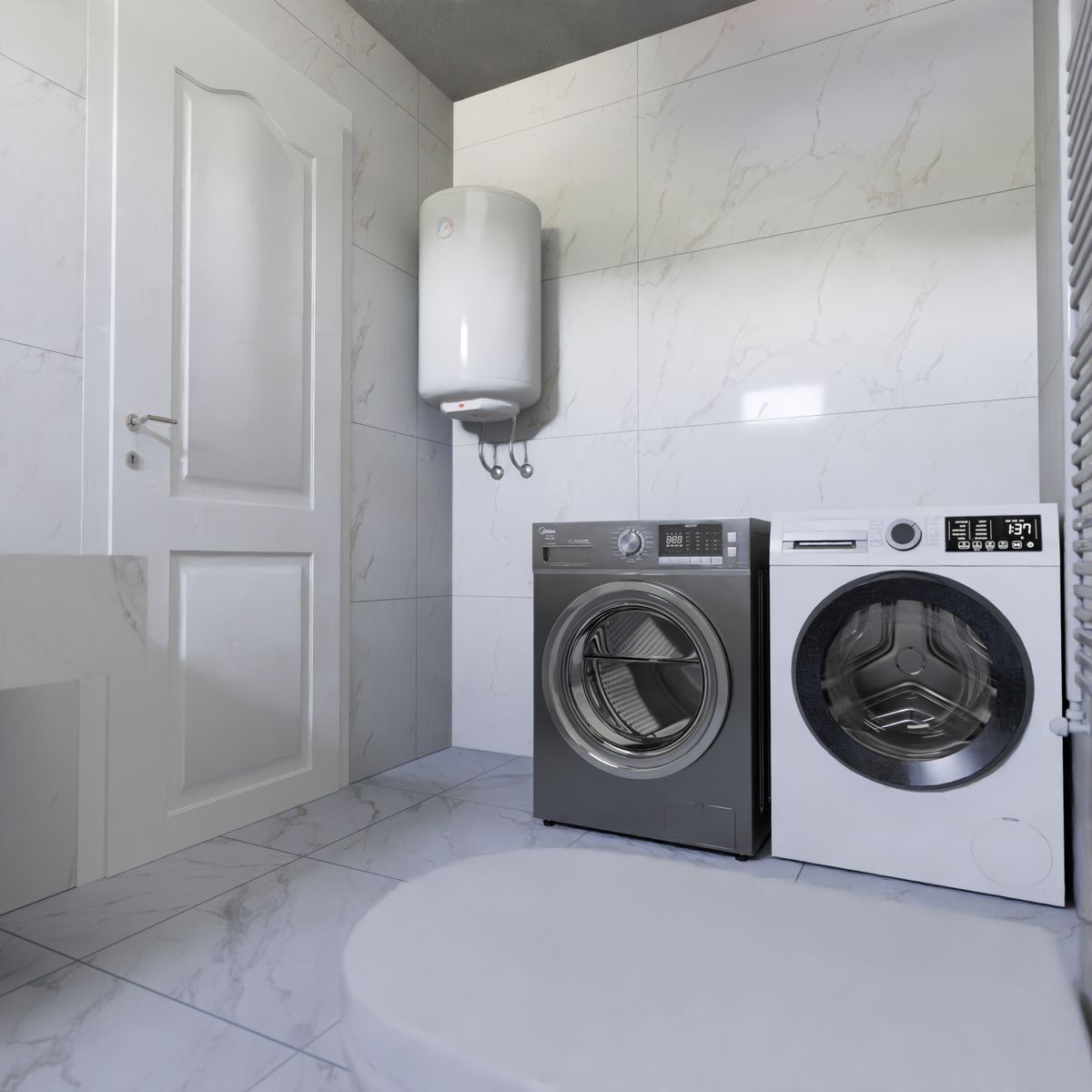
Standard tanks carry the lowest installed cost, tankless the highest, and heat pump units land in between once labor is counted. A 40 gallon gas tank replacement runs $1,586 to $1,843 as of May 2026. A gas tankless install runs $3,293 to $3,859. Heat pump equipment alone runs $1,500 to $3,000.
| Unit type | Equipment plus install, published range | Midpoint | Source and date |
|---|---|---|---|
| Standard tank, 40 gallon gas | $1,586 to $1,843 | about $1,715 | Homewyse, May 2026 |
| Standard tank, 50 gallon electric | $1,920 to $2,254 | about $2,087 | Homewyse, May 2026 |
| Tankless, gas fired | $3,293 to $3,859 | about $3,576 | Homewyse, May 2026 |
| Tankless, electric | $1,642 to $1,925 | about $1,784 | Homewyse, May 2026 |
| Heat pump, unit only before incentives | $1,500 to $3,000 | about $2,250 | ENERGY STAR, February 2, 2024 |
| Heat pump, labor and materials on top | $1,000 to $3,000 | about $2,000 | ENERGY STAR, February 2, 2024 |
Source: Homewyse national cost calculators, May 2026. ENERGY STAR, What Goes into the Cost of Installing a Heat Pump Water Heater, February 2, 2024.
Add the two ENERGY STAR lines together and a heat pump water heater lands somewhere between $2,500 and $6,000 fitted. ENERGY STAR puts the payback at 3 to 6 years against a standard electric tank, and its own savings model assumes an incremental upfront cost of $1,503 over the conventional alternative.
The reason tankless costs roughly twice a tank swap is not the box. It is that the job changes the venting and, on gas, the fuel supply. A tank swap leaves both alone.
Fuel moves the installed price more than brand does. Gas tankless runs $3,293 to $3,859 as of May 2026 because the priced job includes vent ducting upgrades and a gas connection upgrade to 200,000 BTU. Electric tankless runs $1,642 to $1,925, but the priced job assumes three 40 amp 240 volt circuits are available.
| Fuel | Published installed range | Midpoint | What the priced job assumes |
|---|---|---|---|
| Natural gas, tankless | $3,293 to $3,859 | about $3,576 | Vent ducting upgrade and gas supply upgraded to 200,000 BTU |
| Electric, tankless | $1,642 to $1,925 | about $1,784 | Three 40 amp 240 volt connections available |
| Natural gas, tank | $1,586 to $1,843 | about $1,715 | 40 gallon, 40,000 BTU unit with a 9 year warranty |
| Electric, tank | $1,920 to $2,254 | about $2,087 | 50 gallon, 11,000 watt unit |
Source: Homewyse national cost calculators, May 2026, including each page's stated specification.
Propane deserves a straight answer rather than a made up number. The published national averages for tankless are quoted for gas without separating natural gas from propane, so the gas tankless band is the closest sourced starting point. What is not in that band is the propane supply side, meaning tank, regulator and line sizing, which is quoted separately. Federal efficiency rules treat gas fired instantaneous units as one product class, with a minimum uniform energy factor of 0.80 to 0.81 depending on draw pattern.
Electric looks cheaper on the tankless line and more expensive on the tank line. That flip is real. Electric tankless equipment is simpler and needs no flue, while electric tank equipment at 50 gallons carries a higher unit price than a 40 gallon gas tank.
Capacity changes both the unit price and, above 55 gallons, the technology you are legally able to buy. A 40 gallon gas tank replacement runs $1,586 to $1,843 as of May 2026, while a 50 gallon electric install runs $1,920 to $2,254. Tankless units are sized by flow rate, not gallons.
| Capacity or size | Published installed range | Midpoint | Notes |
|---|---|---|---|
| 40 gallon gas tank | $1,586 to $1,843 | about $1,715 | Priced on a 40,000 BTU unit with a 9 year warranty |
| 50 gallon electric tank | $1,920 to $2,254 | about $2,087 | Priced on an 11,000 watt unit |
| 5.3 gpm electric tankless | $1,642 to $1,925 | about $1,784 | Rated at a 35 degree F temperature rise |
| 8.5 gpm gas tankless | $3,293 to $3,859 | about $3,576 | Rated at a 35 degree F temperature rise |
Source: Homewyse national cost calculators, May 2026, with each page's stated specification.
Two things follow from that. First, a tankless quote that does not state a flow rate at a temperature rise is not comparable to another tankless quote. Gallons per minute at 35 degrees F is the unit of comparison the priced estimates themselves use.
Second, the 55 gallon line is a hard technology boundary in federal rules. Under 10 CFR 430.32(d), electric storage water heaters over 55 gallons and up to 120 gallons must meet a minimum uniform energy factor in the range of 1.9236 to 2.2418 minus a small volume term. A uniform energy factor above 1.0 is only reachable with heat pump technology, so a large electric tank is a heat pump water heater by law, at heat pump prices. Below 55 gallons the same rule sets minimums running from 0.8808 to 0.9349 by draw pattern, less a small volume term, which conventional resistance elements meet.
On the gas side, the same regulation prices in a similar step. Gas fired storage units from 20 to 55 gallons face a medium draw pattern minimum of 0.6483 minus 0.0017 times rated volume, while units above 55 gallons face 0.7897 minus 0.0004 times rated volume. Higher minimums push you toward condensing equipment, and condensing equipment changes the venting.
Venting, fuel supply, electrical capacity and permits are what separate a $1,700 swap from a $3,900 install. None of them are about the appliance. Federal and manufacturer documentation names each one, and the published national averages state plainly which of them they include and which they leave out.
| Cost driver | What it involves | Sourced position |
|---|---|---|
| Venting change | Vent ducting upgrade for a gas tankless unit | Included inside the $3,293 to $3,859 gas tankless estimate, Homewyse May 2026 |
| Gas line and connection | Supply upgraded to 200,000 BTU | Included inside the same gas tankless estimate, Homewyse May 2026 |
| Electrical supply | Three 40 amp 240 volt connections for electric tankless | Stated in the electric tankless specification, Homewyse May 2026 |
| Electrical service upgrade | Breaker box capacity and a dedicated 240 volt supply on a gas to electric conversion | Listed as a cost driver, ENERGY STAR February 2, 2024 |
| Air space | Minimum 450 cubic feet for a heat pump unit, louvered door carpentry if short | Listed as a cost driver, ENERGY STAR February 2, 2024 |
| Condensate management | Routing the moisture a heat pump unit produces | Listed as a cost driver, ENERGY STAR February 2, 2024 |
| Thermostatic mixing valve | Required by some codes and programs | Listed as a cost driver, ENERGY STAR February 2, 2024 |
| Sealing old venting | Closing penetrations left by the old fuel fired unit | Listed as a cost driver, ENERGY STAR February 2, 2024 |
| Permits and inspection | Fees set by the local building department | Explicitly excluded from the published national estimates, Homewyse May 2026 |
| Removal and disposal | Disconnect, drain, haul away the old unit | $84.87 to $267, Homewyse May 2026 |
| Debris disposal line | Charged separately on the estimate sheet | $28.35 to $32.25 on a tank job, $35.44 to $40.31 on a tankless or electric job, Homewyse May 2026 |
| Contractor overhead | Added when a general contractor supervises | Add 13 percent to 22 percent, Homewyse May 2026 |
Source: Homewyse national cost calculators, May 2026. ENERGY STAR, What Goes into the Cost of Installing a Heat Pump Water Heater, February 2, 2024.
Electrical permitting appears on the ENERGY STAR list as a separate line from the electrical work itself. That is a useful tell. If two quotes differ by several hundred dollars, permits and the electrical scope are the first place to look, well before the brand of the unit.
Labor is priced by the job, not the hour, and the published national averages leave out three specific things. Homewyse states that its estimates exclude permit and inspection fees, sales tax, and general contractor overhead of 13 percent to 22 percent. Its repair pricing runs on a 2 hour minimum labor charge.
That 2 hour minimum is worth knowing before you call anyone. It means a fifteen minute part swap and a ninety minute part swap can land at a similar price, because the mobilization time is the floor. It is also why bundling two small jobs into one visit usually reads better on the invoice than two separate visits.
What gets excluded from every published national figure on this page:
Source: Homewyse national cost calculators, exclusions stated on the estimate pages, May 2026.
There is a second reason labor quality is not just a price line. Rheem's own residential tankless warranty guide states the unit is intended to be installed by a contractor who is licensed, state qualified and trained on the manufacturer's tankless products, because improper installation may invalidate warranty coverage. The lowest bid that voids a 15 year heat exchanger warranty is not a saving.
The gap, not the sticker, is the number you want. A tank replacement runs $1,586 to $1,843 as of May 2026 and a gas tankless install runs $3,293 to $3,859. The conversion premium is therefore $1,450 to $2,273 at the ends of the two published ranges, or about $1,861 midpoint to midpoint.
| Path | Published installed range | Midpoint | Premium over a tank swap |
|---|---|---|---|
| Replace tank with tank, 40 gallon gas | $1,586 to $1,843 | about $1,715 | baseline |
| Convert to gas tankless | $3,293 to $3,859 | about $3,576 | about $1,861 at the midpoints |
| Convert to electric tankless | $1,642 to $1,925 | about $1,784 | about $69 at the midpoints |
| Convert to heat pump | $2,500 to $6,000 fitted | about $4,250 | about $2,535 at the midpoints |
Source: Homewyse national cost calculators, May 2026. Heat pump line combines the ENERGY STAR equipment range of $1,500 to $3,000 with its installation range of $1,000 to $3,000, February 2, 2024.
The electric tankless line looks like an easy win and usually is not, because the priced job assumes three 40 amp 240 volt connections already exist. In a house that has been running a 50 gallon electric tank on a single 30 amp circuit, they do not. ENERGY STAR lists breaker box capacity expansion and running a dedicated 240 volt supply as real cost drivers on exactly this kind of fuel switch.
The case for paying the gas tankless premium is service life and running cost, both of which are documented. ENERGY STAR gives tankless water heaters a 20 year life expectancy, against 13 years assumed for a heat pump unit in its own savings model. Over a longer life, an ENERGY STAR certified gas tankless unit saves a family of four about $95 a year against a gas storage model, which ENERGY STAR totals at $1,800 across the unit's life.
A repair visit runs $303 to $365 nationally as of May 2026 against $1,586 to $1,843 to replace a 40 gallon gas tank. So a single repair is roughly a fifth of a replacement. The question is how many repairs sit between you and the end of the unit's service life.
| Option | Published national range | Midpoint | Dated |
|---|---|---|---|
| Repair visit | $303 to $365 | about $334 | May 2026 |
| Flush and clean | $169 to $386 | about $278 | January 2026 |
| Remove and dispose of the old unit | $84.87 to $267 | about $176 | May 2026 |
| Replace, 40 gallon gas tank | $1,586 to $1,843 | about $1,715 | May 2026 |
| Replace, 50 gallon electric tank | $1,920 to $2,254 | about $2,087 | May 2026 |
Source: Homewyse national cost calculators, May 2026 and January 2026.
Be careful about what that repair figure covers, because this is where most cost guides quietly invent numbers. The priced national repair job is defined as flushing the tank, inspecting the temperature control and pressure relief components, and adjusting, repairing or replacing the thermostat if needed. Anode rods, gas control valves, igniters and pressure relief valve swaps beyond that scope are quoted per job, and there is no dated national average for them that stands up to a source check. Anyone publishing one has not said where it came from.
So the honest position is this. If the failure is inside that defined repair scope, expect it to sit near the $303 to $365 band. If it is a gas control valve or a heat exchanger, ask for the part price and the labor line separately, and compare the total against the replacement figure for your unit type in the table above.
A flush and clean runs $169 to $386 nationally as of January 2026, and manufacturers treat it as an annual job rather than an optional one. Navien recommends annual maintenance covering the inlet water filters, the intake air filter, the condensate trap, and flushing and descaling the heat exchangers, plus a visual inspection.
| Service | Published national range | Midpoint | Dated |
|---|---|---|---|
| Flush and clean a water heater | $169 to $386 | about $278 | January 2026 |
| Repair visit including a tank flush | $303 to $365 | about $334 | May 2026 |
Source: Homewyse national cost calculators, January 2026 and May 2026. Navien, Tankless Water Heater Maintenance, November 26, 2024.
The reason to actually book it is written into the warranty. Rheem's residential tankless warranty guide excludes damages, malfunctions or failures caused by lime, mineral build up, or scale. That is the exact failure mode descaling prevents, and the heat exchanger it protects is the component carrying the longest warranty term on the unit. Skipping a service that costs a few hundred dollars to protect a part covered for 15 years is poor arithmetic.
Navien's guidance is that hard water means servicing more often, and it points to anti scale or softening equipment upstream to reduce build up. It does not publish a hardness threshold in grains, so treat any specific number you see quoted as unsourced unless the source is named.
ENERGY STAR gives tankless water heaters a 20 year life expectancy and assumes 13 years for a heat pump water heater in its savings model. Warranty terms are shorter and more conditional than that, and they change with how the unit is installed rather than with what you paid for it.
| Installation as documented by the manufacturer | Heat exchanger | Component parts | Labor |
|---|---|---|---|
| Single family dwelling | 15 years | 5 years | 1 year |
| Single family dwelling with hydronic forced air heating | 10 years | 5 years | 1 year |
| Single family dwelling, controlled recirculation loop | 15 years | 5 years | 1 year |
| Single family dwelling, uncontrolled recirculation loop | 3 years | 3 years | 1 year |
| Any installation that is not a single family dwelling | 5 years | 5 years | 1 year |
Source: Rheem Limited Warranty for residential tankless gas water heaters, document AP21265 Rev 03. Life expectancy figures from ENERGY STAR product pages, tankless and heat pump water heaters.
Read the fourth row again. Putting the same unit on a recirculation loop driven by a continuously running pump cuts heat exchanger coverage from 15 years to 3. A loop controlled by an on demand trigger, or by a temperature sensor and timer, keeps the full 15. That is a decision made on install day that is worth twelve years of coverage, and it costs almost nothing to get right at the time.
The same document adds that all warranty periods void after 12,000 hours of operation, and that the warranty clock starts at the original installation date if properly documented, or at the date of manufacture plus ninety days if not. Keep the paperwork.
The commercial row is the answer to a question people ask badly. A commercial water heater replacement is not simply a bigger residential job. The manufacturer's own terms drop heat exchanger coverage from 15 years to 5 for any installation that is not a single family dwelling, which changes the whole ownership cost, not just the invoice.
Yes, and the rules moved twice in recent years. The Department of Energy replaced Energy Factor with Uniform Energy Factor in 2017 as the federal efficiency metric. A final rule for consumer water heaters published on May 6, 2024 sets new minimums with compliance required on and after May 6, 2029.
Uniform Energy Factor measures how much of the energy a water heater uses goes into heating water rather than heating the surrounding air and equipment. Products are sorted into four usage bins, described as very small, low, medium and high, and are only compared for efficiency against other products in the same bin. That is why two units can both be efficient and still not be comparable on a single number.
| Product class | Current federal minimum uniform energy factor |
|---|---|
| Gas fired storage, 20 to 55 gallons, medium draw | 0.6483 minus 0.0017 times rated volume |
| Gas fired storage, above 55 to 100 gallons, medium draw | 0.7897 minus 0.0004 times rated volume |
| Electric storage, 20 to 55 gallons | 0.8808 to 0.9349 by draw pattern, minus a small volume term |
| Electric storage, above 55 to 120 gallons | 1.9236 to 2.2418 by draw pattern, minus a small volume term |
| Gas fired instantaneous | 0.80 to 0.81 depending on draw pattern |
| Electric instantaneous | 0.91 to 0.92 depending on draw pattern |
Source: 10 CFR 430.32(d), Electronic Code of Federal Regulations, current as of August 1, 2026. These are the standards applying before May 6, 2029.
One rule that is often reported as current is not. A separate final rule setting amended standards for consumer gas fired instantaneous water heaters was published on December 26, 2024, delayed in March 2025, then disapproved under the Congressional Review Act and formally withdrawn as of May 20, 2025. If you have read that stricter gas tankless minimums are coming, that is the rule, and it is no longer in force.
What this means practically is narrow but real. Equipment you buy today meets the pre 2029 minimums. Equipment manufactured on and after May 6, 2029 must meet the newer consumer water heater standards, which is a reason not to assume today's model list and today's prices carry forward.
The federal Section 25C credit is closed. The IRS states the Energy Efficient Home Improvement Credit is allowed for qualifying property placed in service on or after January 1, 2023 and before December 31, 2025. A 2026 installation does not qualify. Utility and municipal incentives are a separate matter and still exist.
| Incentive | Status for a 2026 install | Source and date |
|---|---|---|
| Federal Section 25C credit, heat pump water heaters | Not available, property had to be placed in service before December 31, 2025 | IRS, page last reviewed or updated April 28, 2026 |
| Federal Section 25C cap, when it applied | $2,000 a year for qualified heat pumps and heat pump water heaters | IRS |
| Utility and municipal incentives | Still offered by many providers, set locally | ENERGY STAR, February 2, 2024 |
Source: Internal Revenue Service, Energy Efficient Home Improvement Credit, page last reviewed or updated April 28, 2026. ENERGY STAR, What Goes into the Cost of Installing a Heat Pump Water Heater, February 2, 2024.
ENERGY STAR describes utility and municipal incentives as typically ranging from $300 to $1,000. That figure is dated February 2024 and programs change, so treat it as an order of magnitude and check the current offer with your own provider before you build it into a budget.
The practical effect on a heat pump water heater is not small. ENERGY STAR's own model assumes an incremental upfront cost of $1,503 over the conventional alternative. A credit worth up to $2,000 covered that gap. Without it, the payback rests entirely on running cost savings.
Running cost is where the install premium either returns or does not. ENERGY STAR reports that a certified heat pump water heater saves a 4 person household about $550 a year, with a payback of 2.7 years. A certified gas tankless unit saves a family of four about $95 a year against a gas storage model.
| Household size | Heat pump annual saving | Heat pump lifetime saving | Payback |
|---|---|---|---|
| 2 people | $270 | $2,050 | 5.5 years |
| 3 people | $410 | $3,830 | 3.7 years |
| 4 people | $550 | $5,610 | 2.7 years |
Source: ENERGY STAR, Save More with ENERGY STAR Certified Heat Pump Water Heaters, dated April 25, 2025. Model assumes an electricity rate of $0.146 per kWh, an incremental upfront cost of $1,503 and a 13 year equipment life.
| Tankless comparison | Annual saving | Lifetime saving |
|---|---|---|
| ENERGY STAR certified gas tankless versus gas storage, family of four | $95 | $1,800 |
| ENERGY STAR certified gas tankless versus a conventional gas tankless | $20 | $300 |
Source: ENERGY STAR, Save More with ENERGY STAR Gas Tankless Water Heaters. Tankless life expectancy stated as 20 years on the same page.
On efficiency rather than dollars, the Department of Energy's Energy Saver guidance puts demand water heaters at 24 percent to 34 percent more energy efficient than conventional storage tanks in homes using 41 gallons or less of hot water a day, falling to 8 percent to 14 percent more efficient in homes that use a lot of hot water. That second figure is the one the marketing tends to leave out, and it is the reason a large household sees a thinner return from a tankless conversion than a small one does.
Notice which comparison produces the bigger number. Certification level on a tankless unit is worth about $20 a year. Switching a resistance electric tank to a heat pump unit is worth about $550 a year for a 4 person household. The equipment category matters far more than the badge on it.
Every figure above is listed here with its publisher and, where the publisher states one, its date. That is the one thing the cost guides ranking for these searches do not provide. If a number is not traceable to this list, it is not on this page.
Prices move. The dates above are the point of the exercise, so check them against the day you are reading this rather than assuming a figure published in May 2026 still holds.
Nationally, replacing a 40 gallon gas tank water heater runs $1,586 to $1,843 per heater as of May 2026, with a midpoint near $1,715. A 50 gallon electric tank install runs $1,920 to $2,254. Those bands exclude permit and inspection fees, sales tax, and general contractor overhead of 13 percent to 22 percent, so a quote that includes those items is scoped differently rather than simply priced higher. Source: Homewyse national cost calculators, May 2026.
A gas tankless install runs $3,293 to $3,859 per heater as of May 2026, midpoint about $3,576, priced on an 8.5 gpm unit at a 35 degree F temperature rise with vent ducting upgrades and a gas connection upgraded to 200,000 BTU. An electric tankless install runs $1,642 to $1,925, priced on a 5.3 gpm unit needing three 40 amp 240 volt connections. Source: Homewyse national cost calculators, May 2026.
A 50 gallon electric water heater install runs $1,920 to $2,254 per heater as of May 2026, midpoint about $2,087, priced on an 11,000 watt unit. If you are considering going larger, note that federal rules at 10 CFR 430.32(d) require electric storage units above 55 gallons to hit a uniform energy factor set from 1.9236 to 2.2418 by draw pattern, less a small volume term, a level only heat pump technology reaches, which moves the job into a different price class entirely.
A flush and clean runs $169 to $386 per heater nationally as of January 2026, midpoint about $278. Navien recommends annual maintenance covering the inlet water filters, intake air filter, condensate trap and a heat exchanger flush and descale, dated November 26, 2024. It is worth booking because Rheem's residential tankless warranty excludes failures caused by lime, mineral build up or scale, and the heat exchanger it protects carries the longest term on the unit.
The invoice is only part of it. Rheem's limited warranty for residential tankless gas water heaters gives 15 years on the heat exchanger for a single family dwelling, but 5 years for any installation that is not a single family dwelling, with 5 years on parts and 1 year on labor in both cases. All warranty periods void after 12,000 hours of operation. Shorter coverage on the most expensive component changes the ownership cost, not just the install price.
No, and the better ones say so. Homewyse states its national estimates exclude permit and inspection fees, sales tax, general contractor overhead of 13 percent to 22 percent, modifications to existing framing, finishes, fixtures, electrical or plumbing systems, and hazardous material testing. Removing and hauling away the old unit is a separate line at $84.87 to $267 as of May 2026. Compare quotes on scope first, then on price.
Independent Research
Published ranges for tank and tankless replacement, the failures that justify a repair, and the ones that do not. Sourced, dated, and free to read.