Replacing an electric water heater runs $800 to $1,900 installed nationally, typical around $1,300, depending on tank capacity, per Fixr's data updated January 27, 2026. A 50 gallon, 11,000 watt unit priced separately by Homewyse runs $1,920 to $2,254. The circuit and breaker already at the wall usually decide where a quote lands, more than the tank itself.
Hot Water Brief is an independent cost-research site. We are not a contractor and do not perform the work ourselves.
Capacity is the first thing that moves the price, before any electrical work enters the conversation. Fixr's national data, updated January 27, 2026, breaks the installed cost out by tank size and the household it typically fits:
| Tank size | Household fit | Published installed range | Typical |
|---|---|---|---|
| 30 gallon | 1 to 2 people | $600 to $1,000 | about $800 |
| 40 gallon | 1 to 4 people | $700 to $1,650 | about $1,175 |
| 50 gallon | 3 to 5 people | $700 to $1,900 | about $1,300 |
Source: Fixr, Electric Water Heater Installation Cost, updated January 27, 2026. Typical is the arithmetic midpoint of the published range, not a separate figure.
That same page states electric water heater installation runs $800 to $1,500 nationally, average about $1,000, as its own headline for the tank-style category. Homewyse's more itemized estimate prices a 50 gallon, 11,000 watt unit at $1,920 to $2,254, above Fixr's 50 gallon band, because it is built from separate unit, labor, supply line and disposal line items rather than one blended range.
A.O. Smith's own site states a narrower figure still: about $920 to $1,177 for electric water heater installation, against roughly $2,607 for gas, without naming a tank size for either number. Three publishers, three different scopes, is the pattern worth remembering before comparing any single quote against a headline average. For every capacity, fuel type and running cost side by side, see the full cost breakdown.
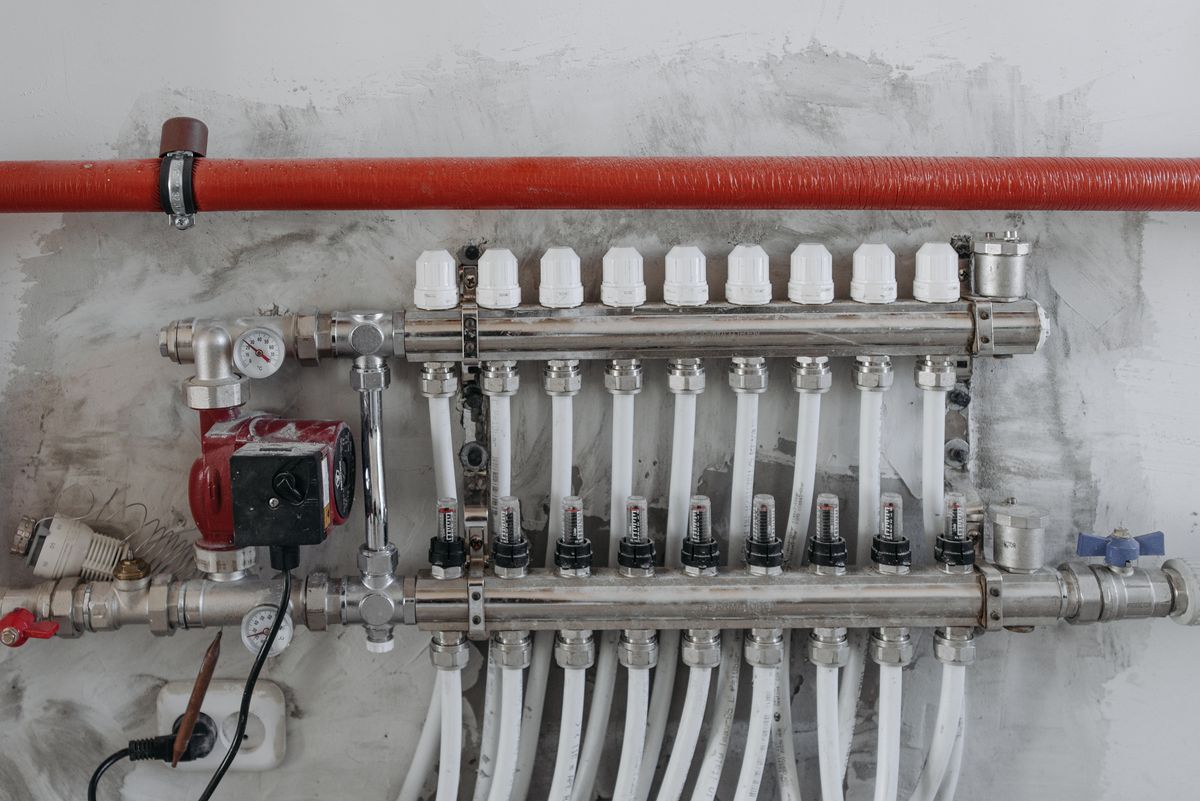
Wattage changes the circuit and the running cost more than the sticker price at a given capacity. Homewyse's itemized 50 gallon estimate is priced on an 11,000 watt unit, while Fixr's running-cost example for the same capacity assumes a single 5,500 watt element, a difference that changes both the monthly power bill and which breaker the unit needs.
Running cost is the clearest place wattage shows up. Fixr's data, updated January 27, 2026, prices a 50 gallon unit's operating cost at about $57.59 a month, based on a 5,500 watt element running roughly 2 hours a day, which works out to about $691 a year at that same assumption, arithmetic on the published monthly figure rather than a separately stated annual one.
On the electrical side, A.O. Smith's own installation guidance states that residential electric water heaters typically run on a 240 volt circuit, sized with 10 gauge wire on a 30 amp breaker, and that the breaker has to be matched to the specific unit rather than assumed from the last one installed. A larger element draws more current on the same tank, which is the practical reason a nameplate's wattage is worth checking against the panel before a swap gets treated as a simple like for like job.
Electrical work is where an electric water heater quote grows past the base installed range, not the tank itself. Fixr prices a dedicated circuit breaker at $400 to $2,000, a new 240 volt outlet at $140 to $300, and a 200 amp service upgrade at $1,200 to $3,000, each added on top, per Fixr, January 2026.
| Electrical work | Published cost | Source, dated |
|---|---|---|
| 240 volt outlet installation | $140 to $300 | Fixr, January 27, 2026 |
| Dedicated circuit breaker | $400 to $2,000 | Fixr, January 27, 2026 |
| Sub-panel installation | $400 to $2,000 | Fixr, January 27, 2026 |
| 200 amp electrical service upgrade | $1,200 to $3,000 | Fixr, January 27, 2026 |
| Gas to electric conversion, full job | $700 to $2,500 | Fixr, January 27, 2026 |
| Gas line capping, on a fuel switch | $75 to $175 | Fixr, January 27, 2026 |
None of those lines are optional upgrades in the way a warranty extension is. They are what the job actually requires once the existing electrical supply falls short of the new unit, and Fixr's own gas to electric conversion total, $700 to $2,500, is effectively several of those lines bundled into one job: a new circuit, a new outlet, and capping the old gas line all at once.
Permits sit on top again. Replacing a water heater usually requires permits, with fees ranging from $25 up to $300 in most cases, climbing as high as $1,500 where multiple permits cover plumbing, the water heater itself, and any electrical changes, per Fixr's January 2026 data. That is a separate line from the electrical work above, and set locally rather than nationally.
Often, yes, on a straight swap where the new unit matches the old one's wattage class. A.O. Smith's installation guidance states residential electric water heaters typically need a dedicated 240 volt circuit sized with 10 gauge wire on a 30 amp breaker, so a like for like replacement on that exact setup usually needs no new circuit at all.
That is the easy case. What changes it is a higher wattage replacement unit, a fuel switch from gas, or a panel that was already close to capacity before the water heater was ever added to it. Fixr treats a full gas to electric conversion as its own job at $700 to $2,500, because it is not a wiring tweak, it is adding a circuit and an outlet that never existed on that wall.
Local code can add requirements beyond the circuit itself. A.O. Smith's guidance notes that, depending on local code, a disconnect switch near the unit or GFCI protection may be required in certain locations such as garages, on top of the base 240 volt, 30 amp, 10 gauge specification. The same guidance is direct about who should handle it: 240 volt work is not the place to cut corners, and it recommends a licensed electrician for that part even where the rest of the swap is straightforward.
The practical check is simple to describe and worth doing before a quote arrives: match the new unit's nameplate wattage and voltage against what is already on the breaker and the wire gauge at the wall, not against what the old tank needed when it was first installed. A match points toward the base installed range above. A mismatch points toward one or more of the electrical line items in the table above.
Usually not. Fixr prices a 40 gallon electric tank's annual operating cost at $550 to $700, against $300 to $450 for gas, both updated January 27, 2026, even though federal rule sets a far higher efficiency floor for electric storage tanks than for gas ones. The reason is the fuel price gap, not the equipment.
Nationally, electricity has cost about 3.6 times as much as natural gas per unit of delivered heat energy, $37.55 versus $10.31 per million Btu, in Energy Information Administration data published November 7, 2018, citing 2015 household expenditure figures. That is an order of magnitude figure rather than this year's bill, but it is the reason a gas storage tank typically costs less to run than a same size electric one, even where electric is the more efficient appliance on paper.
| Measure | Electric storage | Gas storage | Source, dated |
|---|---|---|---|
| Federal minimum uniform energy factor, 20 to 55 gallons | 0.8808 to 0.9349, minus a small volume term | 0.6483 minus 0.0017 times rated volume, about 0.58 for a 40 gallon tank | 10 CFR 430.32(d), current as of August 1, 2026 |
| Annual operating cost, 40 gallon tank | $550 to $700 | $300 to $450 | Fixr, January 27, 2026 |
| Monthly operating cost, 50 gallon, 5,500 watt element | about $57.59 | not published on the same page | Fixr, January 27, 2026 |
Efficiency alone points the other way. Under 10 CFR 430.32(d), electric storage tanks from 20 to 55 gallons must clear a uniform energy factor of 0.8808 to 0.9349 depending on draw pattern, against roughly 0.58 for a 40 gallon gas tank on the same federal scale. Electric resistance turns more of what it buys into hot water, it just buys energy at several times the price per unit nationally, which is why the fuel gap usually outweighs the efficiency gap on the bill. Local utility rates for both fuels decide the real number for any one house. For the same comparison from the gas side, see gas water heater replacement cost.
On price alone, they land close together. A 50 gallon electric tank installs for $1,920 to $2,254, against $1,642 to $1,925 for electric tankless, both per Homewyse, May 2026. Tankless needs no larger tank and can run more efficiently, but it assumes three 40 amp, 240 volt circuits are available, a bigger electrical ask than a tank swap carries.
That closeness is worth pausing on, because tankless usually costs more than a tank swap on the gas side. Electric flips it: the tankless unit needs no flue and a smaller footprint, so the price gap narrows down to whichever side needs more electrical work. If three dedicated 40 amp circuits do not already exist, a tankless conversion can cost more than the tank comparison above suggests, the same way a tank swap can if its own breaker and wiring fall short.
This page stays with the storage tank category. For unit price against installed price, sizing by flow rate, and the panel and breaker requirements specific to electric tankless units, see the electric tankless water heater cost guide and the electric tankless install cost guide, which cover that circuit math in more depth than fits here. For how tank, tankless and heat pump options compare as a set, see the tank replacement comparison.
Every figure above is listed here with its publisher and date. If a number is not traceable to this list, it is not on this page.
Prices move. Check these dates against today rather than assuming an earlier 2026 figure still holds.
Nationally, $800 to $1,900 installed depending on tank size, typical around $1,300, per Fixr, updated January 27, 2026. A 50 gallon, 11,000 watt unit priced separately by Homewyse runs $1,920 to $2,254, dated May 2026. The gap between the two is mostly how each estimate itemizes labor and electrical work, not the tank itself.
Usually, yes. A.O. Smith's installation guidance states residential electric water heaters typically run on a dedicated 240 volt circuit sized with 10 gauge wire on a 30 amp breaker. A like for like swap on that exact setup usually reuses the existing circuit; a higher wattage unit or a fuel switch from gas usually does not.
Fixr prices a dedicated circuit breaker at $400 to $2,000, a new 240 volt outlet at $140 to $300, and a 200 amp electrical service upgrade at $1,200 to $3,000, all updated January 27, 2026. A full gas to electric conversion, which bundles several of those, runs $700 to $2,500.
Usually not. Fixr prices a 40 gallon electric tank's annual operating cost at $550 to $700 against $300 to $450 for gas, both January 27, 2026, even though federal rule under 10 CFR 430.32(d) sets a higher efficiency floor for electric storage tanks. Electricity has cost roughly 3.6 times as much as gas per unit of delivered energy nationally, per Energy Information Administration data.
It affects the running cost and the circuit more than the sticker price at the same capacity. Homewyse's itemized 50 gallon estimate uses an 11,000 watt unit, while Fixr's operating cost example for the same size assumes a single 5,500 watt element, a difference that changes the monthly power bill and which breaker the unit needs.
They land close together. A 50 gallon electric tank installs for $1,920 to $2,254, against $1,642 to $1,925 for electric tankless, both per Homewyse, May 2026. Tankless assumes three 40 amp, 240 volt circuits already exist, so the real cost gap usually comes down to whichever side needs more electrical work.
Independent Research
Published ranges for tank and tankless replacement, the failures that justify a repair, and the ones that do not. Sourced, dated, and free to read.