A straight, like-for-like tank swap runs $1,586 to $1,843 installed for a 40-gallon gas water heater, and $1,920 to $2,254 for a 50-gallon electric tank, both dated May 2026 by Homewyse. Add a permit, an expansion tank, or a vent change, and the job often reaches $2,000 to $3,000.
Hot Water Brief is an independent cost-research site. We are not a contractor and do not perform the work ourselves.
This page covers only the narrow question: swapping an existing conventional tank water heater for another one of the same type, same fuel, roughly the same size. Converting to tankless, switching fuel, or sizing up a unit are different jobs with different costs, and the full cost breakdown covers those, along with tankless install pricing, heat pump costs and running-cost comparisons, in full.
The two most common like-for-like scenarios, and what each publishes as an installed price:
| Job | Published national range | Midpoint | Source, dated |
|---|---|---|---|
| Replace 40-gallon gas tank with the same | $1,586 to $1,843 | about $1,715 | Homewyse, May 2026 |
| Replace 50-gallon electric tank with the same | $1,920 to $2,254 | about $2,087 | Homewyse, May 2026 |
| Total replacement cost, all types and complexity | $600 to $4,500 | not stated | A.O. Smith, hotwater.com, accessed August 2026 |
The wide A.O. Smith band exists because it spans everything from a small electric tank swapped in an easy-access closet to a job that also adds venting, gas line work or an electrical upgrade. The two Homewyse figures above are narrower because they price one specific, defined job: a same-type tank swap that reuses the existing gas, water and vent connections.
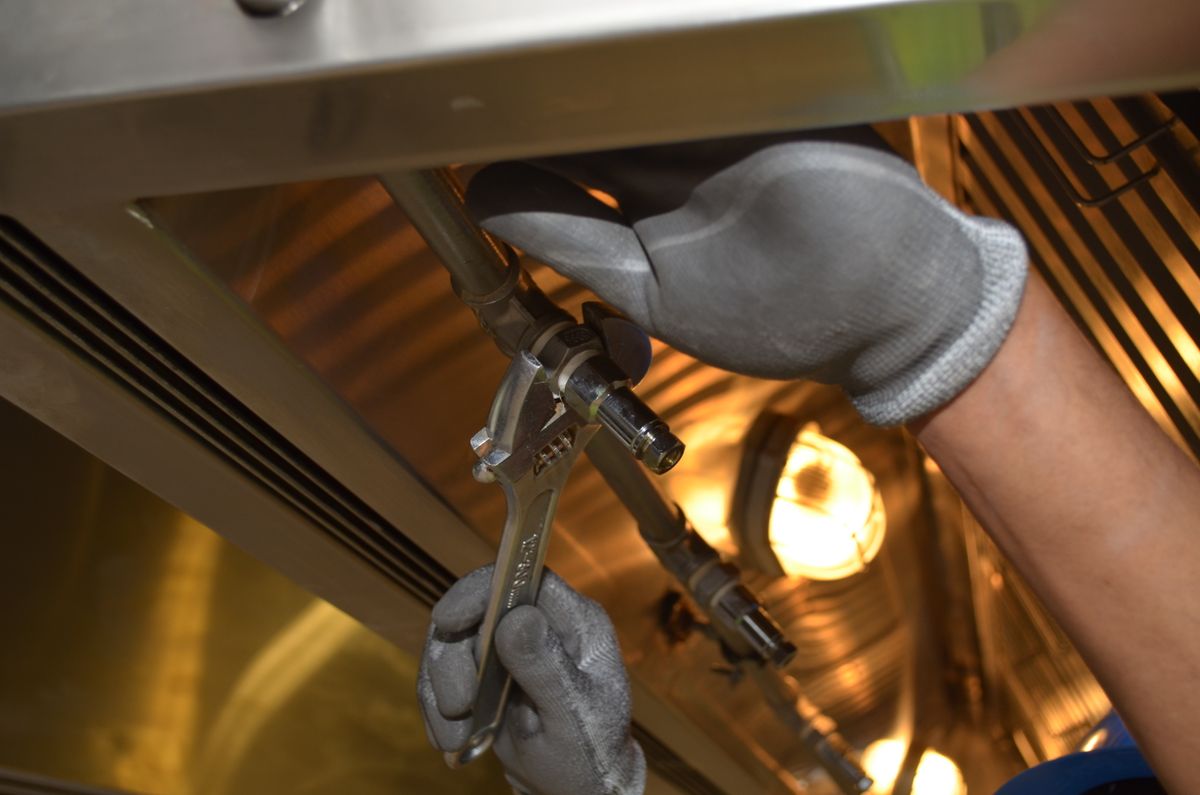
Labor on a straightforward swap runs $200 to $400, rising to $1,000 where venting or electrical work has to change, per A.O. Smith installation guidance. Homewyse prices the whole job, unit and labor together, on a 2-hour minimum labor charge, so a short job and a longer one can land at a similar total.
These are two separate published figures, not two halves of the same total. A.O. Smith's labor range and Homewyse's installed range come from different estimating methods, so subtracting one from the other to back into a unit price would be arithmetic on two different datasets, not a real number. What both agree on is the direction: labor moves the most when the job stops being a pure swap.
| Line item | Published range | Source, dated |
|---|---|---|
| Installation labor, straightforward swap | $200 to $400 | A.O. Smith, hotwater.com, accessed August 2026 |
| Installation labor, venting or electrical changes | up to $1,000 | A.O. Smith, hotwater.com, accessed August 2026 |
| Minimum labor charge | 2 hour minimum | Homewyse, May 2026 |
| Contractor overhead, when a general contractor supervises | add 13% to 22% | Homewyse, May 2026 |
| Permit and inspection | $100 to $500 | A.O. Smith, hotwater.com, accessed August 2026 |
Homewyse states plainly that its national estimate excludes permit and inspection fees, sales tax, and that same 13 to 22 percent contractor overhead. Those three items sit outside the $1,586 to $1,843 figure above, not inside it, so a quote that lists them separately is not necessarily priced higher than the published average, it is scoped differently.
Four things turn a roughly $1,700 swap into a $3,000 job: a required expansion tank, a vent that has to be changed, a permit and inspection, and removing the old unit. None of them are about the water heater itself, and a straight swap can trigger any one of them even with an identical replacement unit.
Plumbing engineer Ron George, writing for PHCP Pros, explains why an expansion tank shows up so often on a job that looks simple on paper. One is needed wherever the water system already includes a check valve, backflow preventer or pressure reducing valve, because those devices stop thermal expansion pressure from relieving back into the street main. Correctly installed, system pressure should not exceed 80 psi. Without an expansion tank on a system like that, George reports pressure often reaches 150 psi, a condition that was likely already present before the old unit failed, not something the new one creates.
| Cost driver | What it involves | Published figure | Source, dated |
|---|---|---|---|
| Expansion tank | Required on closed systems with a check valve, backflow preventer or pressure reducing valve | Tank alone, less than $100 | A.O. Smith, hotwater.com, accessed August 2026 |
| Venting change | Vent path has to be modified or upgraded to match the new unit | $500 to $1,000 | A.O. Smith, hotwater.com, accessed August 2026 |
| Permit and inspection | Filed with and signed off by the local building department | $100 to $500 | A.O. Smith, hotwater.com, accessed August 2026 |
| Drain pan | Required where a leak would reach living space, with a drain of at least three quarters of an inch | Not priced separately in these sources | Ron George, PHCP Pros, April 7, 2015 |
The relief valve discharge line is the other item an inspector checks on a straight swap. PHCP Pros states the discharge pipe must not terminate more than 6 inches above the floor, must end through an air gap in the same room, and cannot be smaller than the valve's own outlet. None of that is optional, and it is one more reason two quotes for what looks like the identical job can land far apart. The buying guide covers the fuller installation checklist, including seismic strapping and condensate rules for heat pump units, in more depth than fits here.
Yes, and sources price it differently. Homewyse lists removal and haul-away as a standalone line at $84.87 to $267, dated May 2026, separate from a smaller debris disposal charge of $28.35 to $32.25 folded into its replacement estimate. A.O. Smith gives its own range of $100 to $400 for old heater removal.
The gap between those figures is a difference in what is being priced, not a contradiction. Homewyse's debris disposal line covers hauling scrap away on a job that is already happening. Its standalone removal estimate prices disconnecting, draining and hauling away a unit as its own visit. A.O. Smith's range sits between the two.
| Removal scenario | Published range | Source, dated |
|---|---|---|
| Debris disposal, folded into a full replacement job | $28.35 to $32.25 | Homewyse, May 2026 |
| Removal and haul-away, priced as its own job | $84.87 to $267 | Homewyse, May 2026 |
| Old heater removal | $100 to $400 | A.O. Smith, hotwater.com, accessed August 2026 |
What matters when you are reading a quote is which of these, if any, is already included. Ask directly whether removal is covered before comparing two quotes on price alone, because an installed price with the old unit gone and an installed price with it left in the garage are not the same line.
ENERGY STAR guidance, published February 2, 2024, says a water heater suspected of being more than 10 years old is worth replacing before it fails, since a sudden failure forces an emergency replacement that can cost more and often limits the choice to less efficient models. Below that age, price alone tends to favor repair.
On price alone, the gap is large. A repair visit runs $303 to $365 nationally, midpoint about $334, against $1,586 to $1,843 to replace a 40-gallon gas tank, both Homewyse, May 2026. That single repair is roughly a fifth of the cost of replacement, which is exactly why age and warning signs matter more than price once a unit passes the ten-year mark.
| Option | Published national range | Midpoint | Source, dated |
|---|---|---|---|
| Repair visit | $303 to $365 | about $334 | Homewyse, May 2026 |
| Replace, 40-gallon gas tank | $1,586 to $1,843 | about $1,715 | Homewyse, May 2026 |
ENERGY STAR lists five signs it treats as replacement territory rather than repair territory: visible corrosion, water leaking from joints, seals or seams, rust in the water, not enough hot water, and rumbling noises. Problems and failures works through each of those symptom by symptom with sourced repair ranges by part, and the full cost breakdown covers what that repair figure does and does not include. If the unit is younger than 10 years and the fault is a single component, that is the next page to read. If it is older, or the tank itself is leaking, the tables above are the ones that apply.
Every figure above is listed here with its publisher and, where the publisher states one, its date. If a number is not traceable to this list, it is not on this page.
Prices move. Check the dates above against the day you are reading this rather than assuming a figure published in May 2026 still holds.
No. Homewyse's national estimate of $1,586 to $1,843 for a 40-gallon gas tank swap, dated May 2026, explicitly excludes permit and inspection fees, sales tax, and general contractor overhead of 13 percent to 22 percent where a general contractor supervises. A.O. Smith separately prices a permit at $100 to $500. Ask what a quote includes before comparing it to a published national average.
In most jurisdictions, yes. Plumbing engineer Ron George, writing for PHCP Pros on April 7, 2015, states that a permit is required because a water heater is one of the most dangerous appliances in a building, and that many jurisdictions make it unlawful to install one without first obtaining a permit from the authority having jurisdiction. A.O. Smith prices permit and inspection at $100 to $500.
Because the plumbing system may already be closed. PHCP Pros explains that an expansion tank is needed wherever the system includes a check valve, backflow preventer or pressure reducing valve, since those devices stop thermal expansion pressure from relieving back into the main. Without one, pressure often reaches 150 psi against the 80 psi a correctly installed system is meant to hold. The tank itself costs less than $100, per A.O. Smith.
Usually, and the published figures do not fully agree with each other. Homewyse prices removal and haul-away as a standalone line at $84.87 to $267, dated May 2026, separate from a smaller debris disposal charge of $28.35 to $32.25 folded into its full replacement estimate. A.O. Smith gives a separate range of $100 to $400 for old heater removal. Ask which one, if any, is already in your quote.
ENERGY STAR's guidance, published February 2, 2024, is that a water heater suspected of being more than 10 years old is worth replacing before it fails, because a sudden failure forces an emergency replacement that can cost more and typically limits the choice to less efficient models. A repair visit runs $303 to $365, against $1,586 to $1,843 to replace a 40-gallon gas tank, both Homewyse, May 2026, so price alone tends to favor repair mainly on a younger unit.
Independent Research
Published ranges for tank and tankless replacement, the failures that justify a repair, and the ones that do not. Sourced, dated, and free to read.