A gas storage water heater replacement runs $700 to $2,700 installed nationally, typical around $1,900, depending on tank size, as of January 2026. A 40 gallon gas tank specifically runs $1,586 to $1,843, per a separate May 2026 estimate. Venting is what usually pushes a quote toward the high end, not the tank itself.
Hot Water Brief is an independent cost-research site. We are not a contractor and do not perform the work ourselves.
Tank size moves the price first. Fixr's national gas water heater cost guide, updated January 30, 2026, breaks the installed price out by size:
| Tank size | Published installed range | Midpoint |
|---|---|---|
| 30 gallon | $700 to $2,100 | about $1,400 |
| 40 gallon | $700 to $2,300 | about $1,500 |
| 50 gallon | $900 to $2,500 | about $1,700 |
| 75 gallon | $1,100 to $3,500 | about $2,300 |
| 80 gallon | $1,300 to $4,000 | about $2,650 |
Source: Fixr, How Much Does a Gas Water Heater Cost, updated January 30, 2026. Midpoint is arithmetic on the published range, not a separate figure.
A narrower estimate for a straightforward 40 gallon swap, priced on a 40,000 BTU unit with a 9 year warranty, puts it at $1,586 to $1,843, about $1,715 at the midpoint, as of May 2026, inside Fixr's wider band. The gap is usually the vent or the gas line, covered next. For diagnosing whether the old unit is worth fixing, see common problems; for the full breakdown across every equipment type, see the full cost breakdown.
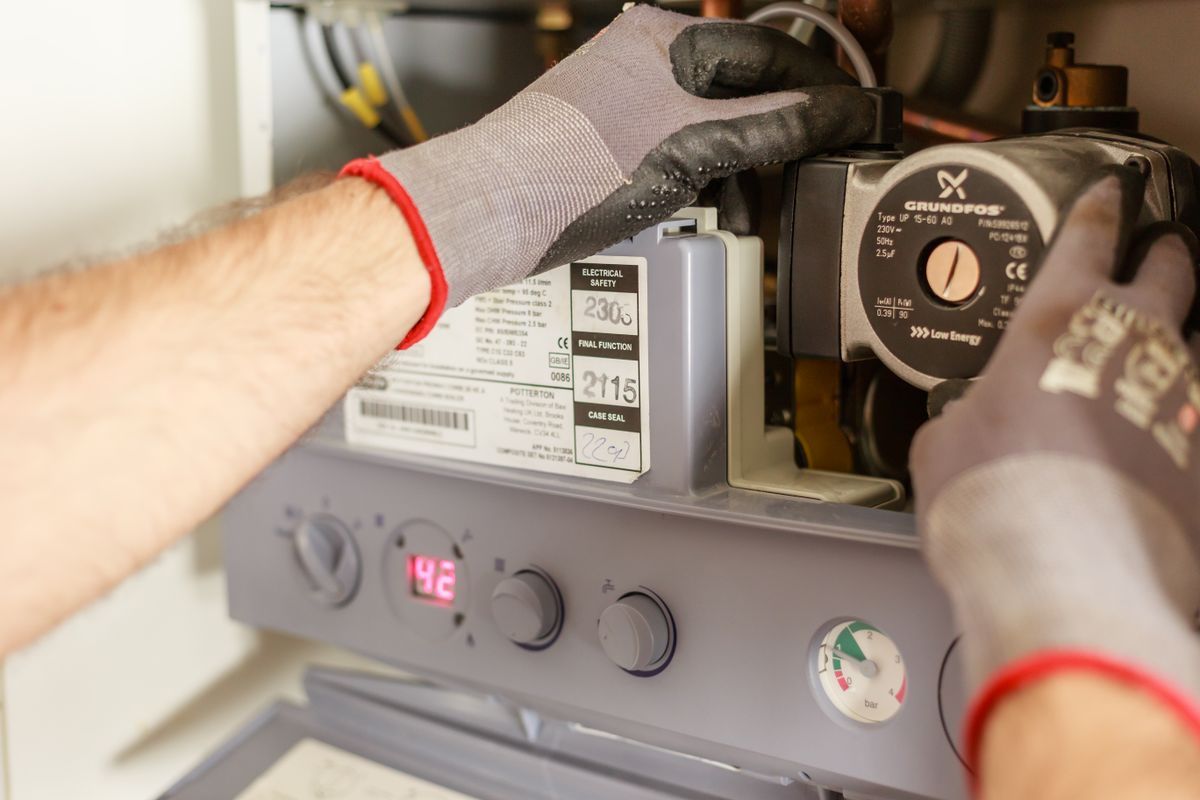
Venting is the single biggest swing factor in a gas water heater quote, because the published national ranges above assume the existing vent is reused. The moment venting has to change, a separate cost appears: about $500 for a direct vent replacement, and nearer $1,100 for a power vent, per data updated in January 2026.
A separate Fixr installation guide, updated January 27, 2026, adds that a power vent and its required electrical connection alone can add $300 to $1,000 to the job.
| Venting scenario | What changes | Published cost signal |
|---|---|---|
| Existing vent reused | No vent work in the job | No separate line in the ranges above |
| Direct vent replacement | Sealed or PVC venting swapped | Closer to $500 |
| Power vent replacement | Blower assisted vent plus a dedicated electrical connection | $300 to $1,100 depending on scope |
| Gas tankless with a vent ducting upgrade | Full installed job, not a repair line | $3,293 to $3,859 installed |
Source: Fixr, How Much Does a Gas Water Heater Cost, updated January 30, 2026; Fixr, How Much Does Water Heater Installation Cost, updated January 27, 2026; Homewyse, Cost to Install Tankless Gas Water Heater, May 2026.
A tank is a known product at a known price. A vent is a fixed path through a wall, a roof or a chimney, and whether the new unit can reuse it depends on the appliance's draft type, not on what the old one used, which is why venting outranks the tank as a budget risk.
Atmospheric venting relies on a draft hood and natural buoyancy to carry exhaust up a vertical metal flue. Power venting adds a blower so the unit is not a draft hood appliance at all and needs no separate dilution air. Direct or condensing venting seals combustion off from the room and exhausts through PVC pipe with a condensate drain.
The distinction is not cosmetic: it decides whether a chimney, a blower and power connection, or a condensate drain is needed. Model code draws the same line. The required combustion air for a draft hood equipped appliance includes extra dilution air, while a fan assisted appliance skips dilution air, because there is no draft hood pulling in extra room air to dilute the flue gas. That comes from the 2021 International Residential Code and International Fuel Gas Code, reissued in a CodeNotes guide by the International Code Council in 2024.
Condensing units are their own category, not a power vent variant. ENERGY STAR's explainer states that some high efficiency gas storage models use a secondary heat exchanger that condenses the exhaust, and that these units vent through vertical PVC with a condensate drain, unlike a standard atmospheric model.
Which type you can install without extra cost depends on what is already in the wall. Same category, same vent. Switch categories and the vent, the penetration, and possibly the electrical supply all become part of the job. See the buying guide for how sizing and fuel selection fit together.
A gas water heater needs either a large enough room or two sized openings to draw combustion air, and the fuel supply has to be sized for the appliance's Btu rating, not just reused from the old unit. Both are licensed professional work: undersized combustion air and undersized gas lines are safety issues, not budget line items to skip.
Model code sets the test. Under the 2021 International Fuel Gas Code's Standard Method, a space needs 50 cubic feet of room volume per 1,000 Btu per hour of appliance input to use indoor air alone, and the code's own worked example puts a 50,000 Btu per hour water heater at needing 2,500 cubic feet. Short of that, the space is confined and needs two permanent openings sized at 1 square inch per 1,000 Btu per hour of total appliance input, never smaller than 100 square inches each, one within 12 inches of the ceiling and one within 12 inches of the floor. That is a licensed installer's calculation, not a tape measure job.
The gas line is the other side of it. Converting from electric or oil to gas can add $3,500 or more in new gas lines and plumbing, per Fixr data updated January 30, 2026. Even a like for like gas swap can need a larger line: Homewyse's May 2026 tankless gas estimate assumes the supply is upgraded to 200,000 BTU, because line sizing follows the appliance, not the fuel type. If you smell gas at any point during this kind of work, that is not a pricing question, see what to do.
Federal rule sets the efficiency floor a new gas storage water heater has to clear. Under 10 CFR 430.32(d), a 40 gallon tank must hit roughly a 0.58 uniform energy factor, and anything above 55 gallons must hit around 0.76, a jump steep enough to effectively require condensing technology.
Uniform Energy Factor scales with tank size. Gas storage over 20 up to 55 gallons on a medium draw pattern must clear 0.6483 minus 0.0017 times rated volume, about 0.58 for a 40 gallon tank. Over 55 up to 100 gallons, the minimum steps up to 0.7897 minus 0.0004 times rated volume, about 0.76 for a 75 gallon tank.
| Tank size | Formula | Approximate current minimum UEF |
|---|---|---|
| 40 gallon | 0.6483 minus 0.0017 times volume | about 0.58 |
| 55 gallon | 0.6483 minus 0.0017 times volume | about 0.55 |
| 75 gallon | 0.7897 minus 0.0004 times volume | about 0.76 |
| 80 gallon | 0.7897 minus 0.0004 times volume | about 0.76 |
Source: 10 CFR 430.32(d), Electronic Code of Federal Regulations, current as of August 1, 2026, applying to units manufactured before May 6, 2029.
That step at 55 gallons matters before you shop: just under it, a tank can still be standard atmospheric, just over it the required efficiency, per ENERGY STAR's explainer, is generally reached with a secondary heat exchanger that condenses the exhaust and vents through PVC rather than a metal flue. A further tightening applies to equipment manufactured on and after May 6, 2029, under a rule published in the Federal Register on May 6, 2024.
Nationally, electricity has cost about 3.6 times as much as natural gas per unit of delivered heat energy, $37.55 versus $10.31 per million Btu in Energy Information Administration data. That price gap, not the federal efficiency floor, is the main reason a gas storage tank typically costs less to run each year than a same size electric resistance tank.
That EIA figure is from a Today in Energy article published November 7, 2018, citing 2015 household energy expenditure data, so treat it as an order of magnitude rather than this year's bill; it is arithmetic on two published fuel prices, not a water heater specific study.
Efficiency alone suggests the opposite. Electric storage tanks up to 55 gallons must clear a federal minimum uniform energy factor of 0.8808 to 0.9349 depending on draw pattern, under the same 10 CFR 430.32(d), well above the roughly 0.55 to 0.58 gas floor. Electric resistance converts more of what it buys into hot water, it just buys energy at several times the price per unit, which is why the fuel gap usually outweighs the efficiency gap on a bill.
Certification adds a smaller effect. ENERGY STAR says a certified gas storage water heater uses 8 percent less energy and saves a family of four about $25 a year over a standard model. Its heat pump savings model, dated April 25, 2025, puts moving a 4 person household off standard electric resistance at about $550 a year. Fuel and technology move the bill by hundreds a year; certification alone moves it by tens.
Every figure above is listed here with its publisher and date. If a number is not traceable to this list, it is not on this page.
Prices move. Check these dates against today rather than assuming an earlier 2026 figure still holds.
Nationally, a gas storage water heater replacement runs $700 to $2,700 installed, typical around $1,900, as of January 2026. A straightforward 40 gallon swap, priced on a 40,000 BTU unit with a 9 year warranty, runs $1,586 to $1,843 as of May 2026. Larger tanks and any change to the vent or gas line push the number toward the high end. Source: Fixr, January 2026; Homewyse, May 2026.
Because the published national ranges assume the existing vent is reused. The moment it has to change, a separate cost appears: about $500 for a direct vent, nearer $1,100 for a power vent, and $300 to $1,000 more if a power vent's electrical connection has to be added. Source: Fixr, data updated January 2026.
Atmospheric units use a draft hood and rely on natural buoyancy through a metal flue. Power vent units add a blower and are not draft hood appliances, which changes their combustion air math under model code. Direct or condensing units seal combustion from the room and exhaust through vertical PVC with a condensate drain. Source: International Code Council, 2021 IRC and IFGC CodeNotes; ENERGY STAR, high efficiency gas storage explainer.
Sometimes. A tankless gas replacement is commonly priced on a gas supply upgraded to 200,000 BTU, and converting from electric or oil to gas can add $3,500 or more for new gas lines and plumbing. Sizing the line is licensed work tied to the appliance's Btu rating, not a homeowner judgment call. Source: Homewyse, May 2026; Fixr, January 2026.
Under 10 CFR 430.32(d), a 40 gallon gas tank must hit roughly a 0.58 uniform energy factor, and anything above 55 gallons must hit around 0.76, a level that in practice requires condensing technology. A further tightening applies to units manufactured on and after May 6, 2029. Source: Electronic Code of Federal Regulations; Federal Register, May 6, 2024.
Usually, because electricity has cost roughly 3.6 times as much as natural gas per unit of delivered energy nationally, even though federal rule sets a higher efficiency floor for electric storage tanks than for gas ones. Local utility rates vary, so treat this as the general pattern rather than a specific bill. Source: U.S. Energy Information Administration, November 2018 article citing 2015 data.
Independent Research
Published ranges for tank and tankless replacement, the failures that justify a repair, and the ones that do not. Sourced, dated, and free to read.