A tankless water heater's equipment alone runs $886 to $1,841 nationally, depending on fuel type, while a full installation runs $1,642 to $3,859, electric on the low end, gas on the high end, as of May 2026. The install nearly doubles the equipment price, mostly in labor, venting and gas or electrical work.
Hot Water Brief is an independent cost-research site. We are not a contractor and do not perform the work ourselves.
The unit price and the installed price are two different numbers, and a cost guide that quotes only one of them is not comparable to one that quotes the other. The unit price is the appliance alone, boxed and uninstalled. The installed price bundles labor plus whatever gas, electrical, venting or condensate work the specific house needs. That gap is the whole subject of this page: what the box costs, what the job costs, and why the two are rarely close. If you have not yet decided tankless is the right fit, the complete owner's guide covers types, fuel and sizing before you get to price. For the wider picture across tank, tankless and heat pump water heaters, including repair and maintenance pricing, see the full cost breakdown. If the unit is not working at all rather than simply due for replacement, the water heater problems and repair costs guide is the more direct read.
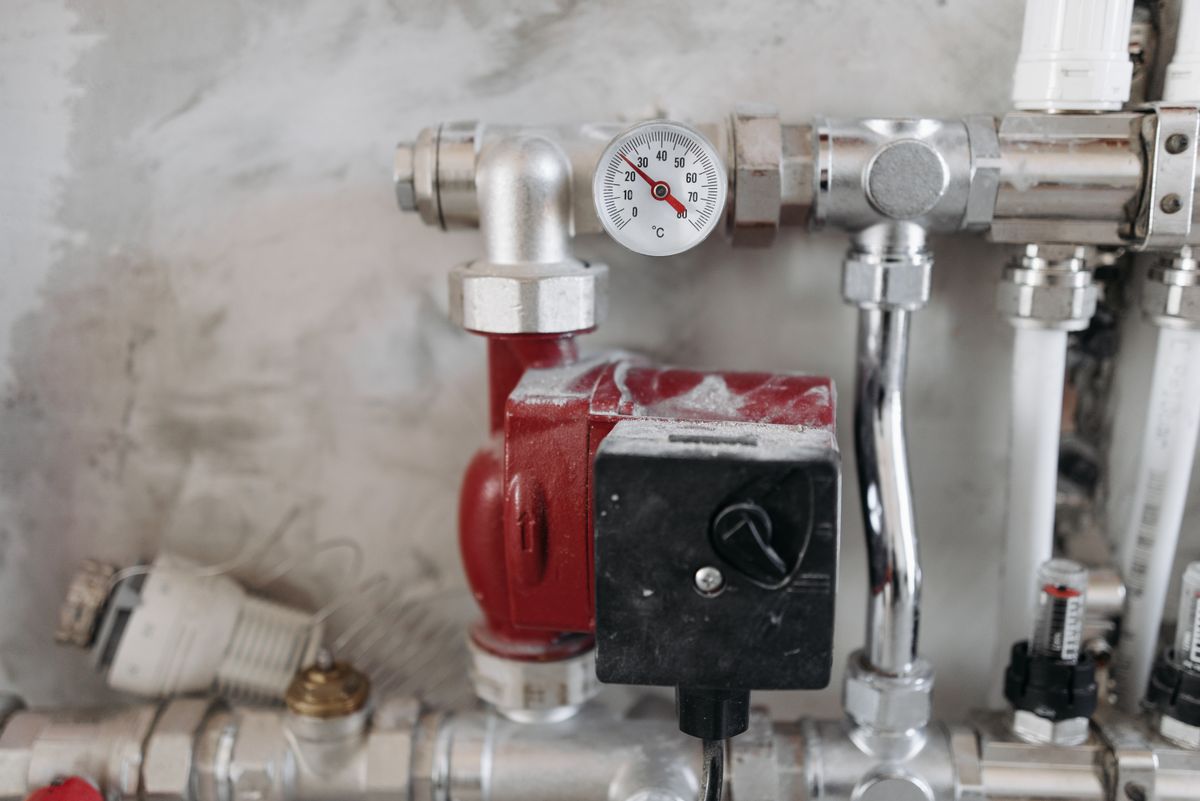
The tankless unit alone, before any labor, runs $886 to $996 for an electric model and $1,638 to $1,841 for a gas model, per Homewyse's national breakdown dated May 2026. That is roughly half of what the same job costs once mounting, connections and any venting or electrical work are added.
| Fuel type | Equipment only | Installation labor | Total installed | Typical (installed) |
|---|---|---|---|---|
| Electric tankless, 5.3 gpm | $886.17 to $996.24 | $886.17 to $996.24 | $1,642 to $1,925 | about $1,784 |
| Gas tankless, 8.5 gpm | $1,637.62 to $1,841.03 | $1,637.62 to $1,841.03 | $3,293 to $3,859 | about $3,576 |
Source: Homewyse national cost estimator for tankless electric installation and the equivalent gas estimator, both dated May 2026. Both units are priced at a 35 degree F temperature rise and a 0.92 energy factor.
Notice that on Homewyse's published breakdown, the equipment line and the labor line are close to the same size for both fuels. That is the real answer to why a tankless unit costs so much more once installed than the price tag on the box suggests: labor, mounting and hookup are not a minor add-on, they run close to half the total bill on the published national figures. A retail listing that shows only the unit price is showing well under half of what the finished job typically costs.
Gas costs roughly twice as much installed. A gas tankless unit runs $3,293 to $3,859 installed against $1,642 to $1,925 for electric, per Homewyse, May 2026. The gap is not the appliance, it is the supporting work: gas needs a bigger fuel line and a vent upgrade, while electric needs extra circuits but no flue.
Homewyse's priced gas tankless job covers mounting and securing the new unit, upgrading the vent ducting, upgrading the gas connection to 200,000 BTU, and routing and connecting gas and water from the existing supply lines. The priced electric tankless job assumes three 40 amp 240 volt electrical connections are already available at the unit, and explicitly excludes electrical system modifications, permit fees and bringing existing wiring up to current code.
That last exclusion matters. If those three 40 amp circuits are not already there, wiring them in is extra, on top of the $1,642 to $1,925 quoted range. The same logic applies to gas: if the existing line was sized for a smaller tank-type unit, upgrading it to carry 200,000 BTU is part of what pushes a gas tankless quote toward the top of its range rather than the bottom.
Four things move the price beyond the appliance itself: the gas line, the vent, the electrical circuit and, on a condensing model, the condensate drain. Homewyse's priced national gas tankless job already assumes a gas connection upgraded to 200,000 BTU and a vent ducting upgrade, both inside the $3,293 to $3,859 range, dated May 2026.
| Variable | Gas tankless | Electric tankless | Source, dated |
|---|---|---|---|
| Gas or electrical supply | Gas connection upgraded to 200,000 BTU, priced inside the installed job | Three 40 amp 240 volt circuits required at the unit | Homewyse, May 2026 |
| Venting | Vent ducting upgrade, priced inside the installed job | Not applicable, no flue | Homewyse, May 2026 |
| Low voltage control power | 120 volts AC and 5 amps maximum for the control board and igniter; a dedicated circuit is recommended, not required | Not separately specified in the priced national job | Noritz, February 26, 2022 |
| Condensate | On condensing models, condensate runs an acidic pH of 3 to 5; some local codes require a neutralizer before it drains | Not applicable | Navien, accessed August 2026 |
That condensate line is easy to miss when comparing quotes. Condensing tankless models capture extra heat from the exhaust, which is why they carry a higher efficiency rating (Navien lists up to 0.96 uniform energy factor on its condensing line), but the condensation this produces is acidic. Navien states it forms carbonic acid as water vapor absorbs carbon dioxide from combustion, landing at a pH of 3 to 5, and that local codes may require neutralizing it before it reaches the drain. A neutralizer kit and its ongoing media are a real, recurring line item that a one-time installed price does not capture.
This is also the honest explanation for why two quotes on the same brand and model can land four figures apart. One house already has a gas line rated for 200,000 BTU, adequate venting clearance and a nearby drain for condensate. The other needs all three built out. The unit is identical in both cases; the site conditions are not.
A conventional 40 gallon gas tank replacement runs $1,586 to $1,843 installed, against $3,293 to $3,859 for gas tankless and $1,642 to $1,925 for electric tankless, all per Homewyse, May 2026. Gas tankless costs roughly double a tank swap. Electric tankless lands close to tank pricing because it skips the flue that drives the gas tankless premium.
| Job | Installed range | Typical (midpoint) |
|---|---|---|
| 40 gallon gas tank replacement | $1,586 to $1,843 | about $1,715 |
| Electric tankless install, 5.3 gpm | $1,642 to $1,925 | about $1,784 |
| Gas tankless install, 8.5 gpm | $3,293 to $3,859 | about $3,576 |
Source: Homewyse national cost calculators, May 2026.
That electric tankless figure sitting so close to a tank swap surprises people, and it only holds because the priced job assumes the electrical capacity is already in place. Add a panel upgrade and the comparison changes. If you are specifically weighing whether to convert an existing tank installation to tankless, including the premium at the midpoints and what drives it, the full cost breakdown covers that comparison in more depth, alongside heat pump and repair pricing.
An ENERGY STAR certified gas tankless unit saves a family of four about $95 a year against a gas storage tank, or about $1,800 over its life, and about $20 a year against a conventional, non-certified gas tankless unit. ENERGY STAR rates tankless life expectancy at 20 years, well beyond a conventional tank.
| Comparison, family of four | Annual saving | Lifetime saving |
|---|---|---|
| ENERGY STAR certified gas tankless vs. gas storage tank | $95 | $1,800 |
| ENERGY STAR certified gas tankless vs. conventional gas tankless | $20 | $300 |
Source: ENERGY STAR, Save More with ENERGY STAR Gas Tankless Water Heaters.
That saving does not by itself offset the higher install price quickly. At $95 a year, recovering roughly $1,861 in extra installed cost (the midpoint gap between gas tankless and a tank swap, from the table above) takes about 20 years, using the figures on this page. That is close to the unit's full 20 year life expectancy, which is the honest way to read the payback rather than a saving felt within a year or two. Where tankless earns its premium back faster is on the parts of ownership this page does not price: fewer tank replacements over the same span, and, on condensing models, the efficiency gain behind the $95 figure in the first place.
Every figure on this page is listed here with its publisher and date, so you can check it against the day you are reading this.
Prices move. The dates above are the point of citing them, so check them against the day you are reading this rather than assuming a figure published in May 2026 still holds.
The unit alone runs $886 to $996 for an electric tankless model and $1,638 to $1,841 for a gas model, per Homewyse's national breakdown dated May 2026. That equipment line is roughly half of the full installed price once labor, mounting and any venting, gas or electrical work are added.
Electric costs less installed in the published national data: $1,642 to $1,925 against $3,293 to $3,859 for gas, per Homewyse, May 2026. The gap comes from the supporting work rather than the appliance: gas tankless needs a bigger gas line and a vent upgrade, while electric tankless needs extra 240 volt circuits but no flue.
On Homewyse's published national breakdown, dated May 2026, the labor line for both gas and electric tankless installs runs close to the same size as the equipment line. Mounting the unit, routing gas or electrical connections, and upgrading venting are priced as roughly half the job, not a minor add-on to the appliance price.
Often, yes. Homewyse's priced national gas tankless job assumes the gas connection is upgraded to 200,000 BTU, and the electric tankless job assumes three 40 amp 240 volt circuits are already available at the unit, both dated May 2026. If your existing gas line or panel does not already meet that, expect the added work to push your quote toward the top of the published range or beyond it.
A 40 gallon gas tank replacement runs $1,586 to $1,843 installed, against $3,293 to $3,859 for gas tankless, per Homewyse, May 2026. Gas tankless costs roughly double. Electric tankless, at $1,642 to $1,925, lands close to tank pricing because the priced job has no flue to add, though it still assumes adequate electrical capacity is already in place.
An ENERGY STAR certified gas tankless unit saves a family of four about $95 a year against a gas storage tank, or roughly $1,800 over a 20 year life expectancy. At that rate, recovering the roughly $1,861 midpoint premium over a tank swap takes about 20 years, close to the unit's full rated life, based on the figures above.
Independent Research
Published ranges for tank and tankless replacement, the failures that justify a repair, and the ones that do not. Sourced, dated, and free to read.