It depends entirely on where the water is coming from. A leaking T&P relief valve, drain valve, or fitting is usually a straightforward repair. Condensation on the tank is not a leak at all. Only water seeping from the tank body itself, with no source above it, means the unit is replaced rather than repaired.
Hot Water Brief is an independent cost-research site. We are not a contractor and do not perform the work ourselves.
The table below is the quick version of this page, covered part by part further down.
| Where the water is coming from | Repairable | Typical cost if repairable |
|---|---|---|
| T&P (temperature and pressure) relief valve | Yes | $100 to $250 |
| Drain valve | Yes | $100 to $200 |
| Inlet or outlet fitting, or the nipple connecting the pipe | Yes | Often the lower end of $50 to $600, sometimes just tightening |
| Tank body, corroded through | No, replace the unit | $600 to $2,000 for a new tank |
| Condensation on a cold-water-fed tank | Not a leak at all | Nothing, there is no fault to fix |
Source: Fixr, Water Heater Repair Cost, updated 29 August 2025.
For the wider picture of what else can go wrong with a tank or tankless unit, see the water heater problems overview. If water is reaching an outlet, cord, or the panel, or the tank is spraying rather than dripping, skip ahead to the emergency page for what to shut off first.
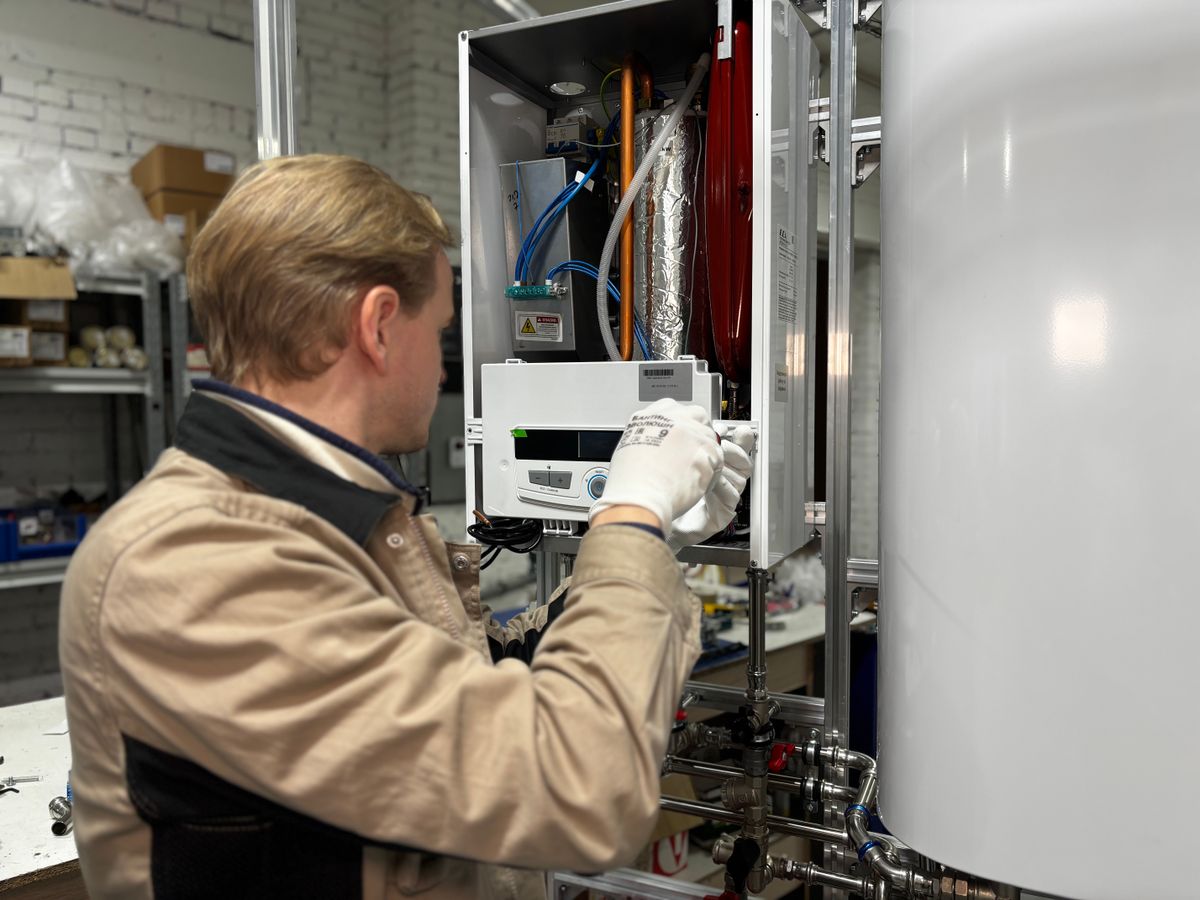
Often, yes, and it is usually just a valve. The T&P relief valve opens on its own when tank pressure or temperature climbs too high, and a valve that has started weeping from its discharge pipe is commonly swapped for a new one. Fixr prices that replacement at $100 to $250.
Repeated discharge, though, means something upstream is pushing pressure up, not a faulty valve. Writing for the International Code Council, Charles Lee Clifton describes the T&P valve as a safety device and states that any discharge from it indicates a problem needing attention, not a nuisance to plug. Code requires the discharge pipe to end at an air gap in the same room as the heater, with no cap, valve or tee anywhere in the line, terminating no more than six inches above the floor, in material rated for at least 100 psi at 180°F.
A.O. Smith names the two usual causes: excess pressure or excess temperature in the tank. Lowering the thermostat, or installing a properly sized and charged expansion tank, addresses the cause; a valve that is physically damaged is simply replaced. A one-time drip after a hot spell is usually the valve. A valve that discharges daily is usually thermal expansion in a closed plumbing system, with the expansion tank as the real fix.
Never cap the discharge pipe to stop the drip. That is exactly what the code language above exists to prevent.
Usually, yes, and it is a repair rather than a replacement. The drain valve sits near the bottom of the tank, and its internal seal wears with age and mineral buildup, letting water seep or drip from the spigot even when it is closed. Fixr prices a drain valve replacement at $100 to $200.
A.O. Smith's guidance is consistent with that: when a drain valve fails to seal properly, the fix is replacing the valve rather than trying to repair it in place. A worn washer or a valve that will not fully close both show up the same way, as a slow but steady drip from the spigot itself rather than from the seam or wall of the tank behind it.
Because the drain valve sits low, it is easy to confuse with a corroding tank seam nearby. The distinction is where the water first appears. If it is coming specifically from the spigot opening, that is the valve. If it is coming from the tank wall or the joint where the tank meets its base, that points to the next section instead.
Often, yes. The pipe nipples and threaded fittings where the cold inlet and hot outlet connect to the top of the tank can loosen or corrode over time, and dripping there is one of the more affordable leaks to fix. Fixr's overall leak repair range is $50 to $600 for this kind of leak.
Fixr's guide notes some leaks are minor, caused by connections that just need tightening or fresh Teflon tape on the threads, which is why the fix ranges as widely as the cost does. A fitting that has simply worked loose gets retightened. One with corroded threads, or a cracked fitting, gets replaced outright, which costs more in parts and in the labor to drain the top of the tank to reach it.
A dry paper towel run around each fitting, one at a time after wiping the area dry, is a reasonable way to narrow down which connection is actually wet before calling anyone. This is licensed plumber work either way, since the fittings sit on top of a pressurized, often gas-fired, appliance.
If water is seeping from underneath the tank with nothing dripping onto it from any fitting, valve, or seam above, the steel tank has corroded through. Fixr's cost guide states plainly that once rust develops in the tank it cannot be fixed. The unit is replaced rather than repaired, typically for $600 to $2,000.
ENERGY STAR treats this the same way: leaks from any joints, seals or seams are usually an indication there is a problem, corrosion is a sign the water heater is breaking down, and because a water heater is a closed system, moisture on the outside points to something failing inside. A storage tank is steel with a glass lining. Once that lining fails at a point and rust eats through the wall behind it, there is no lining left there and no patch that holds against the next fill.
This kind of leak often shows up alongside other signs the tank is on its way out, rusty or discolored hot water among them. The water heater problems overview covers the anode rod and corrosion side of that in more depth.
On A. O. Smith tanks, the manufacturer's inspection schedule for the anode starts at six months. Bradford White owners can check the outlet anode against the manufacturer's depletion test before a tank starts to weep.
Sometimes, and it is worth ruling out before paying for a repair. A.O. Smith states a typical water heater produces roughly half a gallon of water vapor an hour while it runs, and that vapor condenses on cool surfaces, especially when cold water is entering the tank.
Modern, more efficient heaters condense more, not less, because they pull more heat out of the flue gas than older models did. A.O. Smith's technical bulletin gives a specific way to tell condensation from an actual leak: wipe up any water under the heater, turn the thermostat to the pilot setting, and wait eight hours. Condensation should stop once the entire tank has heated above roughly 115°F, so no new water means it was condensation. Water that reappears with every fitting dry and tight points to an actual leak instead.
Condensation is more likely right after a new water heater is installed, during a cold snap, or after heavy hot water use pulls in a lot of cold water at once. None of that means anything is wrong with the unit. If you are not comfortable adjusting the thermostat yourself, this is a fine question to hand to a licensed plumber rather than a reason to assume the worst.
On Non-SENSEI Rinnai tankless models, a leak inside the cabinet is reported as Rinnai code 79.
When water is reaching an electrical outlet, cord, or the panel, when the tank is spraying rather than dripping, or when you can smell gas near a gas-fired unit. Any of those calls for shutting off power or fuel and getting help, rather than working through which part is leaking first.
The emergency page covers the shutoff order in full, cold water inlet first, then fuel, and when to leave the building instead of troubleshooting at all. This page assumes a smaller, contained leak where there is time to look at where the water is actually coming from before deciding what to do about it.
One relief valve situation is worth calling out on its own: a valve that discharges repeatedly, not once, is the system reporting an ongoing problem. The International Code Council's guidance is that this needs the underlying cause diagnosed, not the valve simply swapped and the discharge pipe capped.
Every figure and safety statement above traces to a named, dated source, listed here so you can check it yourself.
If a source could not be found for a number, the number is not on this page.
It depends on the source. A T&P relief valve, drain valve, or fitting leak is a repair, typically $100 to $250 for the valve or $50 to $600 for a fitting, per Fixr's cost guide. A leak from the tank body itself is different: Fixr states once rust develops in the tank it cannot be fixed, so that leak means replacement.
Fixr prices a T&P relief valve replacement at $100 to $250. If the valve keeps discharging rather than leaking once, A.O. Smith points to excess pressure or temperature as the likely cause, fixed by lowering the thermostat or adding a properly sized expansion tank rather than just replacing the valve again.
A.O. Smith's technical bulletin gives a test: wipe up existing water, set the thermostat to pilot, and wait eight hours. Condensation should stop once the tank has fully heated above roughly 115°F, so no new water means it was condensation. Water that reappears with every fitting dry and tight points to a real leak instead.
Not usually. A.O. Smith and Fixr both treat a drain valve that will not fully seal as a straightforward part replacement, priced at $100 to $200. The main thing to check is where the water first appears: from the spigot itself, which is the valve, or from the tank wall behind it, which points to corrosion instead.
That pattern points to the tank body itself corroding through. ENERGY STAR treats leaks from joints, seals or seams as a sign of internal breakdown, and Fixr's cost guide states that once rust develops in the tank it cannot be fixed. Replacement typically runs $600 to $2,000 rather than a repair.
As soon as water is reaching an outlet, cord, or the electrical panel, the tank is spraying rather than dripping, or you can smell gas near the unit. The emergency page covers the correct shutoff order, cold water inlet first, then fuel, for exactly that situation.
Independent Research
Published ranges for tank and tankless replacement, the failures that justify a repair, and the ones that do not. Sourced, dated, and free to read.