A straight tank swap is still the lowest upfront number: installed tank prices run about $1,586 to $2,254, against $1,642 to $3,859 installed for tankless and $1,200 to $3,500 for a heat pump unit alone, all sourced below. The gap is mostly labor, because a tank swap usually reuses the venting and wiring already there.
Hot Water Brief is an independent cost-research site. We are not a contractor and do not perform the work ourselves.
This page treats tank as an equipment category and lines it up against the other two mainstream choices. It does not repeat the line-by-line tank pricing already published, see the full replacement cost breakdown for that. For how all water heater types compare on fuel, efficiency and sizing, see the buying guide.
| Equipment | Published cost | Typical | Source, dated |
|---|---|---|---|
| Tank, 40-gallon gas, like-for-like, installed | $1,586 to $1,843 | about $1,715 | Homewyse, May 2026 |
| Tank, 50-gallon electric, like-for-like, installed | $1,920 to $2,254 | about $2,087 | Homewyse, May 2026 |
| Tankless, electric, installed | $1,642 to $1,925 | about $1,784 | Homewyse, May 2026 |
| Tankless, gas, installed | $3,293 to $3,859 | about $3,576 | Homewyse, May 2026 |
| Heat pump, unit only, not installed | $1,200 to $3,500 | about $2,350 | A.O. Smith, hotwater.com, accessed August 2026 |
The heat pump row is unit price only because no publisher in this brief states a national installed figure for it. A.O. Smith's own installation guidance says a heat pump job typically costs more than a tankless install, without giving a number, so a heat pump total likely lands above its own unit price and above the gas tankless total once labor is added.
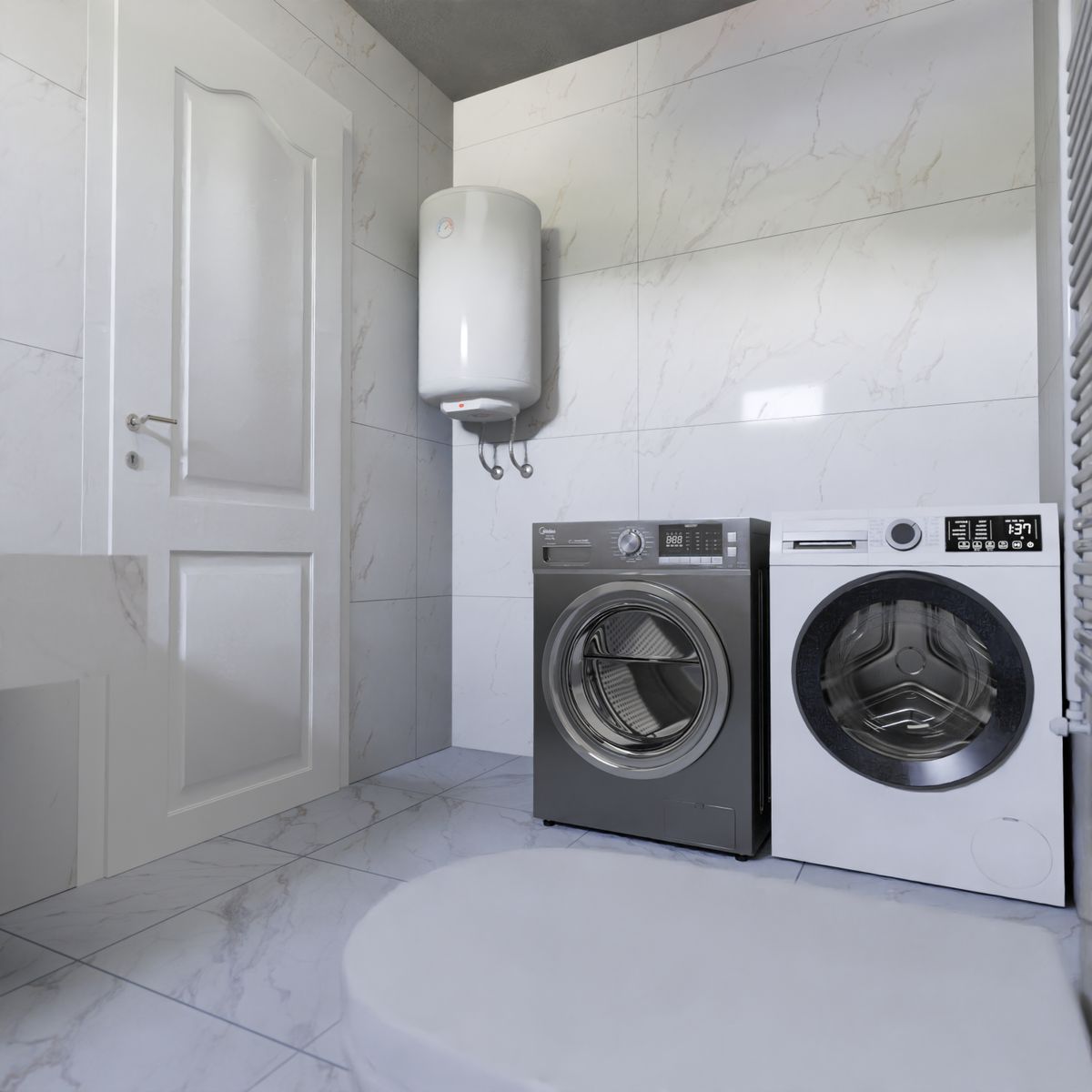
Upfront, a tankless install usually costs less than a heat pump water heater. Installed tankless runs $1,642 to $1,925 for electric and $3,293 to $3,859 for gas, per Homewyse, May 2026. A heat pump unit alone is $1,200 to $3,500, per A.O. Smith, accessed August 2026, and A.O. Smith's installation guidance says a heat pump job typically costs more than a tankless install, without giving a number.
Running cost is where the heat pump earns its price back. Federal purchasing guidance, updated May 2024, puts an ENERGY STAR certified heat pump model near $97 a year against about $340 for a standard electric storage heater. No source on this page gives a comparable figure for tankless, so compare the installed quote first, then the energy cost on your own rates.
Because a straight tank swap usually reuses the gas or electric connection, the vent, and the water lines already in place, while switching categories often does not. A.O. Smith's installation guidance says gas tankless typically needs a larger gas line, and a heat pump needs its own electrical circuit and a condensate drain, neither required for a tank swap.
On a tank, A.O. Smith prices installation labor for a straightforward swap at $200 to $400, rising toward $1,000 only where venting or electrical work has to change. Gas tankless changes more by default: its installation guide states tankless units have larger input burners than gas storage tanks, so upgrading usually means increasing the gas line size, and some models use concentric vents that must include a condensate trap. A.O. Smith separately prices direct-vent venting work at $500 to $1,500 added to the installation.
Electric tankless is the one place tankless is structurally simpler than a gas unit: A.O. Smith states its electric tankless models do not need venting at all. The tradeoff moves to electrical, the same guidance says to plan for additional wiring, and in colder climates the higher-kW models needed require a larger electrical service and breaker capacity.
Heat pump adds the most: A.O. Smith's Voltex product line calls for at least 450 cubic feet of surrounding air space and an installation location that stays above 37 degrees F, and states plainly that installation can be more complex than a standard water heater, requiring proper electrical connections and condensate drainage. That combination, lower sticker price, no venting change, one less system to size correctly, is the practical case for a tank even where a more efficient option exists.
Size a tank by first hour rating, the gallons it can deliver in one hour starting from a full heat, not by the number printed on the outside. The federal test that produces that rating sorts households into four demand bins, and a household with average demand needs a tank rated at 51 to under 75 gallons first hour rating.
| Household demand | Daily hot water in the federal test | Tank first hour rating needed |
|---|---|---|
| Very light | 10 gallons per day | 0 to under 18 gallons |
| Light | 38 gallons per day | 18 to under 51 gallons |
| Average | 55 gallons per day | 51 to under 75 gallons |
| Heavy | 84 gallons per day | 75 gallons and above |
Source: 10 CFR Part 430, Subpart B, Appendix E, uniform test method for water heaters, current edition, accessed August 2026.
A smaller tank with a stronger burner can outperform a larger tank with a weak one, which is why first hour rating and not raw gallons is the number to match against your household. Tankless sizing runs on gallons per minute at a temperature rise instead, and heat pump models have their own minimum tank size by bedroom count. Neither applies to a straight tank purchase, and the buying guide covers both in full.
Federal purchasing guidance assumes a 13-year product life across residential water heaters for its cost modeling, while ENERGY STAR states tankless units typically reach about 20 years, well beyond a conventional tank-type unit. Neither figure changes what a tank swap costs today, but the gap is why a higher tankless price gets defended on a per-year basis.
The 13-year figure comes from the Department of Energy's Federal Energy Management Program, in guidance last updated May 2024. ENERGY STAR's separate statement, that tankless water heaters have a life expectancy of 20 years, much longer than any conventional tank-type water heater, does not publish a matching year count for tanks, only the comparison. What ENERGY STAR does say directly about tanks is a replacement threshold rather than a lifespan: a water heater suspected of being more than 10 years old is worth replacing before it fails, guidance dated February 2, 2024, because a sudden failure forces an emergency replacement at a worse price and a narrower choice of models.
What actually shortens a tank's life, mainly water hardness, a spent anode rod, and unrelieved pressure, is a longer answer than fits here; the buying guide works through each factor with its sourcing.
There is no single right answer: it depends on how long you plan to stay, what fuel and space you already have, and whether the install work above is even possible in your home. A tank keeps the day-one number lowest and the job simplest; tankless and heat pump trade a higher sticker price for a longer stated service life.
That running-cost advantage is the clearest published number in this comparison. Federal purchasing guidance puts the annual energy cost of a standard electric storage water heater near $340, against $97 for an ENERGY STAR certified heat pump model, a lifetime gap of $3,440 versus $940 over the assumed 13-year life, guidance updated May 2024. Those figures are modeled at a federal electricity price, so treat the gap as the transferable finding rather than the exact dollars for your utility bill.
What this page cannot tell you is which is right for your house. For the exact tank-for-tank price, including permit and expansion tank line items, see the full replacement cost breakdown. For repair pricing before you decide to replace anything, and for how tankless and heat pump compare on fuel and sizing, see the cost hub and the buying guide.
Every figure above is listed here with its publisher and, where the publisher states one, its date. If a number is not traceable to this list, it is not on this page.
Prices move. Check the dates above against the day you are reading this rather than assuming a figure published in May 2026 still holds.
On the published national figures, yes for installed cost. Homewyse prices installed tank swaps at $1,586 to $2,254, against $1,642 to $3,859 installed for tankless, both May 2026. A.O. Smith's heat pump unit price alone runs $1,200 to $3,500, and A.O. Smith states a heat pump install typically costs more than a tankless install, without publishing a specific total.
Mainly the gas line and the vent. A.O. Smith's installation guide states tankless gas water heaters have larger input burners than gas storage tanks, so upgrading usually means increasing the gas line size. A.O. Smith separately prices direct-vent venting work at $500 to $1,500 added to the installation, a cost a like-for-like tank swap does not carry.
Yes. A.O. Smith states its electric tankless units do not need venting at all, unlike gas tankless. The tradeoff moves to electrical: the same guidance says to plan for additional wiring, and colder climates often need a larger electrical service and breaker for the higher-kW models required there.
Per the federal test that sets the number on the yellow label, a household in the average demand bin, 55 gallons of daily hot water in the test, needs a tank with a first hour rating of 51 to under 75 gallons, per 10 CFR Part 430, Subpart B, Appendix E.
ENERGY STAR states tankless water heaters have a life expectancy of 20 years, much longer than any conventional tank-type water heater, though it does not publish a matching year count for tanks in that statement. Separately, DOE federal purchasing guidance assumes a 13-year product life across residential water heaters generally for its own cost modeling, updated May 2024.
Independent Research
Published ranges for tank and tankless replacement, the failures that justify a repair, and the ones that do not. Sourced, dated, and free to read.