Converting an existing tank water heater to tankless typically adds $864 to about $3,576 in gas line and electrical work on top of a straight tankless-for-tankless swap. The low end covers a gas line upsize alone, the high end adds a panel upgrade and a new circuit, based on national installer pricing dated May 2026.
Hot Water Brief is an independent cost-research site. We are not a contractor and do not perform the work ourselves.
This page is only about that gap, the extra work a storage tank never needed and a like-for-like tankless swap does not need either. It is not the general tank-versus-tankless comparison; for fuel-specific installed pricing and the running-cost payback, see the tankless water heater cost overview. If you have not settled on tankless yet, the complete owner's guide covers types and sizing, and the full cost breakdown rounds up every water heater job this site prices.
A storage tank and a tankless unit sit differently at the gas meter, the breaker panel and the vent stack. A tankless-for-tankless swap reuses all three because the previous install already solved them. A tank-to-tankless conversion often does not, and that is where the cost of replacing a water heater with tankless climbs above a simple appliance swap. The line items below are where that shows up on a quote.
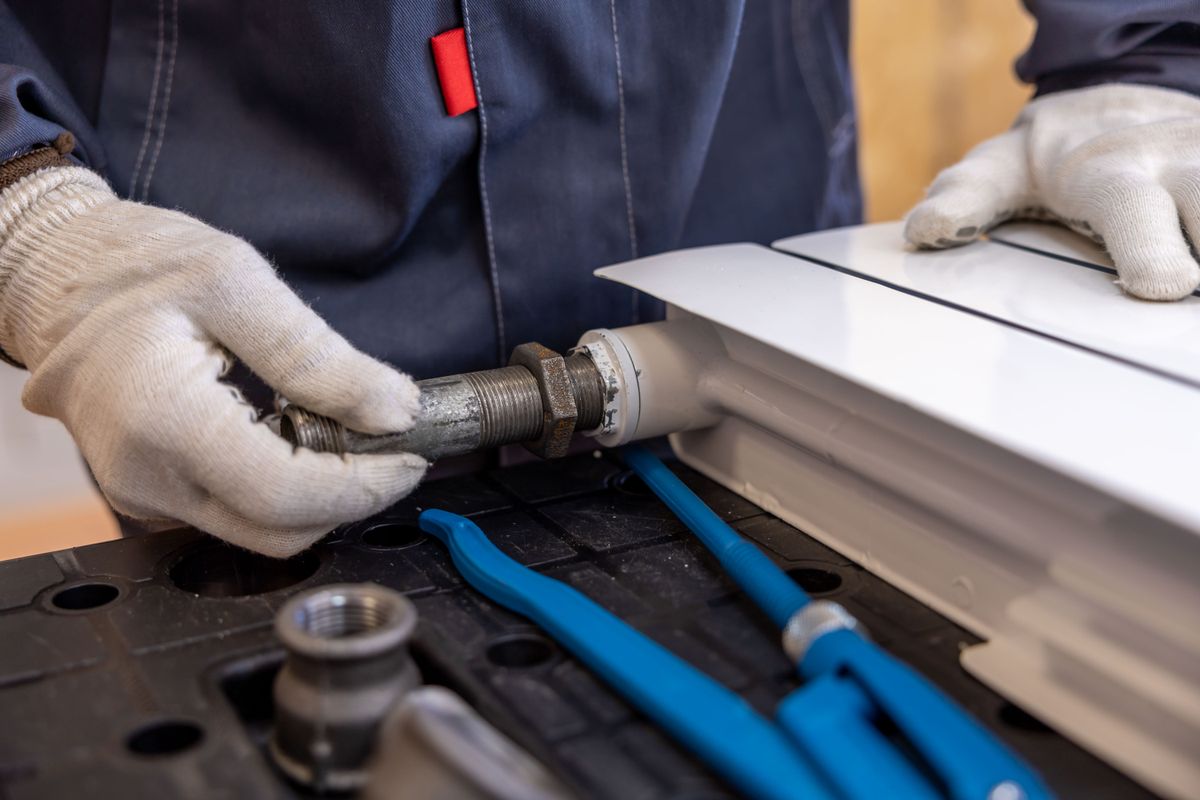
Swapping a tank for tankless in a camper is a different job; see RV tankless conversion sizes and costs.
The core change is fuel volume and exhaust path. A typical gas storage tank draws 30,000 to 50,000 Btu per hour and vents up a chimney, while a gas tankless unit draws 120,000 to 200,000 Btu per hour and vents sideways through an outside wall, per the Building America Solution Center, updated August 2021.
| Spec | Storage tank | Tankless | Source |
|---|---|---|---|
| Gas input | 30,000 to 50,000 Btu/h | 120,000 to 200,000 Btu/h | Building America Solution Center, Aug 2021 |
| Typical example cited | about 40,000 Btu/h | up to 199,900 Btu/h | Building America Solution Center, Aug 2021 |
| Gas branch line | commonly 1/2 inch | often needs 3/4 inch | Building America Solution Center, Aug 2021 |
| Venting | atmospheric, up a flue or chimney | direct vent or sealed combustion, terminated through a wall | Building America Solution Center, Aug 2021 |
Non-condensing tankless models exhaust hot enough, about 300 degrees Fahrenheit, to need stainless steel venting, while condensing models cool the exhaust to about 100 degrees Fahrenheit and can use PVC, a material distinction a tank's simple flue never required, per the Building America Solution Center, updated August 2021. Homewyse's national gas tankless installed price, $3,293 to $3,859 as of May 2026, already folds a vent ducting upgrade and a gas connection upgrade to 200,000 Btu into that total. For the full fuel-specific breakdown, see the gas tankless installed cost guide.
Yes. A standard storage tank has no electronics and needs no outlet, but a tankless unit's control board and igniter need a 120 volt AC power supply, something the tank at that location never had. That single added outlet is a small job on its own, but it is still new electrical work a straight tankless swap would not need.
The Building America Solution Center states that even natural gas water heaters require a 120 volt AC outlet for the controls, sensors and electric spark ignition, in guidance updated August 2021. On a conversion, an electrician or plumber runs and terminates that circuit for the first time rather than reusing one a prior tankless unit already had. It rarely appears as its own line on a quote because it is a small addition, but it is one more thing a straight tank-for-tank replacement never touches.
Switching fuel type, not just appliance type, adds the most. Homewyse's national electric tankless installed price of $1,642 to $1,925, dated May 2026, assumes three 40 amp 240 volt circuits are already at the unit; a house coming from a gas tank almost never has them, so wiring and possibly a panel upgrade get added on top.
| Conversion add-on item | What it involves | Typical added cost | Typical (midpoint) | Source, dated |
|---|---|---|---|---|
| New or upsized gas branch line | Branch run up to 30 feet from the existing main, sized for the unit's full Btu draw | $864 to $1,060 | about $960 | Homewyse, May 2026 |
| New dedicated appliance circuit | One 240 volt circuit run from the panel to the unit | $741 to $910 per circuit | about $825 | Homewyse, May 2026 |
| Electrical service panel upgrade | Needed only if the existing panel lacks capacity; priced for a basic 100 amp, 20-space panel | $1,325 to $1,606 | about $1,465 | Homewyse, May 2026 |
| Combined range across these items | Low end assumes only a gas line upsize; high end adds a panel upgrade plus one new circuit | $864 to $3,576 | about $2,220 | Arithmetic on the rows above |
None of these items always apply, and Homewyse's electric tankless total explicitly excludes electrical modifications and permit fees, so a house that needs even one of them should expect a quote above the published $1,642 to $1,925 range. Old tank removal is a separate matter, covered next; Homewyse's installed figures already include it rather than pricing it as an extra line. For the electric-only fuel breakdown without these conversion add-ons, see the electric tankless water heater cost guide.
Yes, when the work is priced as a full installed job. Homewyse's national tankless installation listing states that detaching, draining and hauling away the old unit is part of the priced job, not a separate charge, dated May 2026. If a sealed-combustion tankless replaces an atmospheric-vented tank on a shared chimney, the vacated opening also has to be sealed.
The Building America Solution Center's installation checklist states that when a sealed-combustion, direct-vented system replaces an atmospheric vent, the hole in the chimney wall shall be sealed. Its companion resource guide also flags the orphaned flue problem: if the water heater shared a chimney with a furnace or boiler, removing the water heater's share can leave that flue oversized for what is left, a safety issue for whoever services the remaining appliance, not just a cosmetic one.
Four smaller items round out most conversion quotes: a condensate line on condensing models, a thermal expansion tank on closed water systems, R-3 pipe insulation on the accessible piping, and a three-quarter inch or larger drain pan line, all called out in the Building America Solution Center's gas tankless installation checklist.
None of these appear on a straight tank-for-tank swap, and the checklist lists them as required when the condition applies, not as optional upsells. It is a real part of why a conversion quote reads longer than a tank replacement quote, per the Building America Solution Center's gas tankless installation checklist.
Every figure on this page is listed here with its publisher and date, so you can check it against the day you are reading this.
Prices move. The dates above are the point of citing them, so check them against the day you are reading this rather than assuming a figure published in May 2026 still holds.
Expect $864 to about $3,576 on top of the tankless unit's own installed price, covering whichever of a gas line upgrade, a new electrical circuit or a panel upgrade your house needs, based on national installer pricing dated May 2026. A house with adequate gas and electrical capacity already in place lands at the low end or below it.
Not always, but often. A typical storage tank runs on a 1/2 inch branch line while a gas tankless unit's 120,000 to 200,000 Btu per hour draw often needs 3/4 inch, per the Building America Solution Center, updated August 2021. Homewyse prices a new gas branch line at $864 to $1,060 nationally, dated May 2026.
Homewyse's national estimate for one new appliance circuit is $741 to $910, dated May 2026. A gas tankless unit typically needs one 120 volt circuit for its controls and igniter; an electric tankless unit needs multiple 240 volt circuits, which is a larger add-on if the panel does not already have room.
Only if the panel lacks capacity for the new circuit or circuits the tankless unit needs. Homewyse prices a basic 100 amp, 20-space panel upgrade at $1,325 to $1,606 nationally, dated May 2026. Homes converting to electric tankless from a gas tank are more likely to need this than gas-to-gas conversions.
Yes, when priced as a full installed job. Homewyse's national tankless installation listing states that detaching, draining and hauling away the old unit is part of the priced job rather than billed as a separate line, as of May 2026. If the old tank shared a chimney with another appliance, expect the vacated flue opening to be sealed too, per the Building America Solution Center's installation checklist.
Independent Research
Published ranges for tank and tankless replacement, the failures that justify a repair, and the ones that do not. Sourced, dated, and free to read.