Gas hot water heater repair typically runs $150 to $750 nationally, averaging $450, per Fixr's repair cost guide updated August 29, 2025. Gas units fail in four places: the pilot or ignition system, the gas control valve, the venting, or the tank itself. Combustion and gas-line work is licensed-professional territory, not a homeowner project.
Hot Water Brief is an independent cost-research site. We are not a contractor and do not perform the work ourselves.
That range sits above the $100 to $650 typical range for electric repairs, largely because gas jobs more often need a licensed technician to check gas pressure or combustion rather than a simple part swap.
| Failure area | What it looks like | Typical repair range | Where to read more |
|---|---|---|---|
| Pilot or ignition system | Pilot won't stay lit, or an ignition system throws an error | $75 to $325 | thermocouple cost |
| Gas control valve | No gas reaching the burner, or a temperature complaint | Priced separately | gas valve cost |
| Venting or draft | Soot, a wrong-sloped flue, or exhaust spilling into the room | Diagnosis first | Covered below |
| Tank itself | Rust or a leak through the tank wall | $600 to $2,000, usually replacement | problems hub |
Source: Fixr, Water Heater Repair Cost, updated August 29, 2025. For part-level pricing, see water heater repair prices.
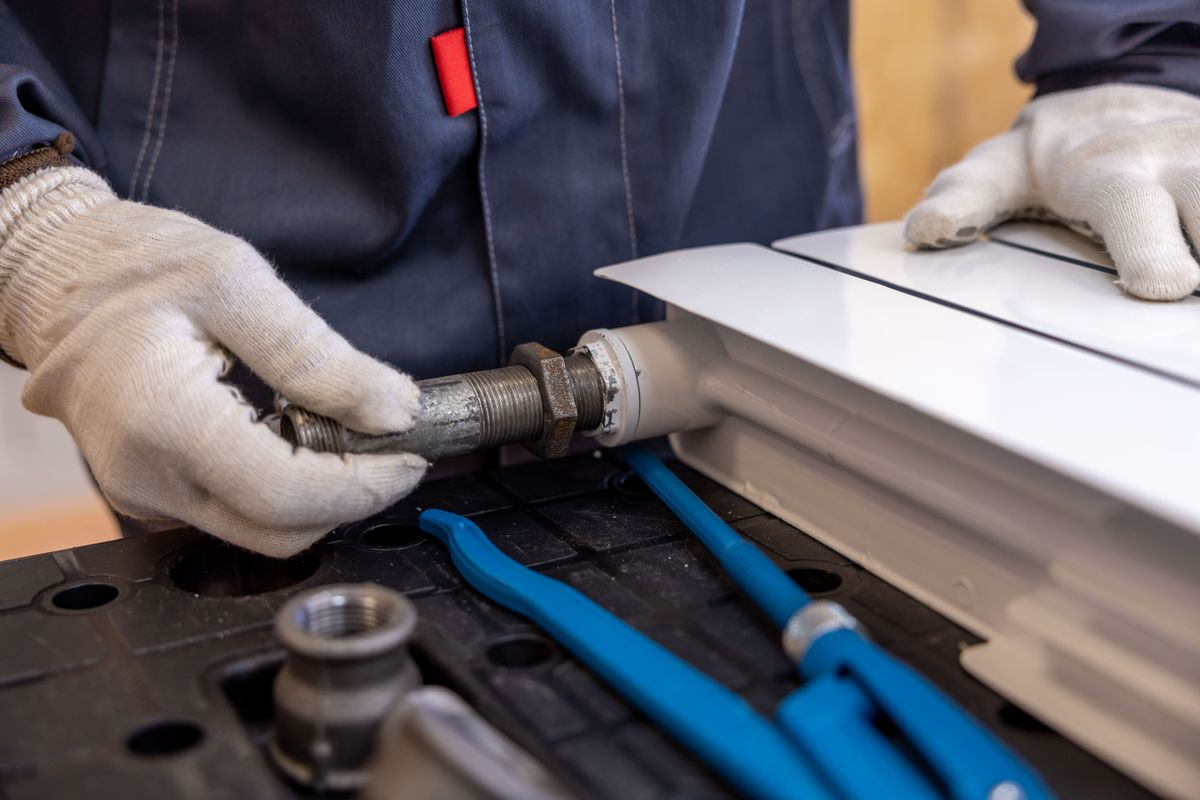
Sulfur-smelling hot water from a Bradford White heater usually points to the outlet anode, covered in Bradford White water heater anode rod replacement.
A pilot that lights and then dies within seconds almost always means the thermocouple is no longer proving the flame to the gas valve, which shuts gas off as a safety response. Fixr prices thermocouple replacement at $150 to $325. A dirty pilot orifice, low gas pressure, or a draft on the flame cause the same symptom.
That safety response is deliberate. A thermocouple sitting in a healthy pilot flame produces 25 to 35 millivolts, just enough current to hold a spring-loaded valve open, and a reading under 20 millivolts means it can no longer do that job even if the flame looks normal, per Hunker's explainer on gas water heater thermocouples, updated 23 August 2018.
Relighting the pilot once, following the instructions on the unit, is a reasonable homeowner step. Doing it repeatedly is not: a pilot that keeps going out is reporting a failed part or a draft problem. For the full millivolt test and replacement cost, see water heater thermocouple replacement cost.
Units with electronic ignition have no standing flame to go out, so a lighting failure shows up as an error code rather than a dead pilot. Noritz documents code 11 as ignition failure and code 90 as a combustion abnormality serious enough to need a licensed contractor to check gas pressure and test the spark.
Noritz's tankless documentation, updated 21 May 2019, groups faults into families: ignition failure, flame loss after lighting, and combustion abnormalities tied to gas supply, blockages or fan debris, while Navien's NPE-2 manual lists an equivalent code, E003. Fixr's tankless guide, published 31 January 2025, prices ignition-failure repair at $100 to $300.
A single power cycle, off for a few minutes then restarted, clears many temporary faults. A code that keeps returning after that points to hardware or venting, not a fluke worth repeating the reset for. For error code tables by brand, see water heater problems and Rheem water heater repair.
Tankless owners seeing an ignition code should read what Rheem's code 11 means. On older Rheem tankless units, a combustion-air or vent problem can end in a code 13 shutdown. On a Rinnai tankless heater, a restricted vent shows up as code 10, an air supply or exhaust blockage. On a Rinnai tankless unit, a failed ignition shows as code 11, No Ignition.
A gas control valve regulates gas flow to the burner and, on most gas units, doubles as the temperature control, so a bad valve can show up as no ignition at all, an inconsistent temperature, or a smell of gas at the valve body. It is a licensed technician's diagnosis, not a part to swap on a guess.
Because the valve is also the thermostat on a gas unit, water heater thermostat replacement cost already covers what that part costs and how it is priced separately from a thermocouple, so this page will not repeat those figures. Worth knowing here: a failing thermocouple typically lets the pilot light and then die the moment you release the control knob, while a failing valve more often stops the pilot from lighting at all, or lets it light while temperature control drifts.
Either way, the valve sits on the gas line itself, and testing or replacing it means opening a live gas connection, the kind of job the safety guidance below is built around.
Backdrafting is when a gas water heater's combustion gases come out of the draft hood into the room instead of up the flue, per the Department of Energy's Building America Solution Center. It happens when the house depressurizes, a flue is blocked or disconnected, or the vent slopes the wrong way, and it can put carbon monoxide into indoor air.
| Sign | What it suggests |
|---|---|
| Soot on top of the tank | Exhaust condensing back onto the unit |
| Melted plastic near the gas pipes | Heat escaping where it should not |
| Flue sloped downward or disconnected | Exhaust has no reliable path out |
| Flame or smoke pushed away from the draft hood | An active backdraft while running |
The guide, updated 28 July 2025, describes a simple test: hold a lighter or incense stick near the draft hood after the heater has run, and the flame should draw in, not push away. If it pushes away, the guide's recommendation is direct: call a plumber, and carry a battery-powered carbon monoxide detector meanwhile.
Backdrafting is not always the water heater's fault. A separate Building America Solution Center resource on Combustion Appliance Zone testing, updated 24 July 2017, explains a natural-draft appliance can pass a spillage test with the house sealed up, then fail once an exhaust fan or dryer starts pulling air, because the house itself depressurizes. The fix then is combustion air openings to the outdoors, not a new part, which is why a repeat backdraft complaint is worth diagnosing by someone who tests the whole space.
Checking a breaker or confirming other gas appliances still work is safe. Anything past that, relighting a pilot, adjusting gas pressure, opening the gas valve, or working on the flue, is licensed-professional work. The Centers for Disease Control and Prevention names an improperly operating or vented water heater as the most common source of home carbon monoxide exposure.
Hot Water Brief is an information site. We do not perform repairs, hold licenses, or set prices, and we make no claim about how a company responds or what a job will cost.
A single pilot or ignition failure is usually a part repair. A pilot or backdraft problem that keeps returning after a fix, especially on a unit already past about ten years old, points at something bigger: sediment inside the tank, a vent or combustion air problem, or a tank near the end of its life, which is a replacement conversation.
ENERGY STAR's guidance, published 2 February 2024, is that a water heater suspected of being more than ten years old is worth replacing before it fails, since an emergency replacement typically limits the choice to less efficient models. That threshold matters more on the gas side, because a repeat backdraft or pilot problem traced to insufficient combustion air will follow the unit into its replacement unless the vent or the room's air supply is corrected too, per the combustion air math in gas water heater replacement cost.
For the full repair-or-replace framework across every fault, see water heater problems.
Every number and claim above traces to a published, dated source, listed here.
See water heater repair prices for part-level pricing, and water heater problems for full symptom-by-symptom diagnosis.
Nationally, gas and propane water heater repairs run $150 to $750, averaging $450, per Fixr's repair cost guide updated August 29, 2025. Ignition failure on a gas tankless unit runs $100 to $300, per Fixr's tankless guide, published January 31, 2025. Local labor rates and access move the number.
Relighting a pilot once, following the instructions on the unit, is a reasonable homeowner step. Doing it repeatedly is not: a pilot that keeps going out is reporting a failed thermocouple or a draft problem, and the Building America Solution Center warns that mishandling the process can accidentally let gas leak into the home.
A standing pilot burns continuously and relies on a thermocouple, which produces 25 to 35 millivolts to hold the gas valve open, per Hunker's explainer. Electronic ignition units have no standing flame; they light on demand and report a failure to light as an error code, such as Noritz's code 11 or Navien's E003, rather than a dead pilot.
Backdrafting means combustion gases are coming out of the draft hood instead of up the flue, per the Building America Solution Center, updated 28 July 2025. It can be caused by a blocked or disconnected flue, or by the house depressurizing when an exhaust fan or dryer runs, which a Combustion Appliance Zone test is built to catch.
Leave the area on foot. The Pipeline and Hazardous Materials Safety Administration's guidance is not to look for the source, not to operate any valves or switches, and to call 911 from a safe location before notifying the gas utility. This is not a troubleshooting situation.
Functionally, yes, on most gas water heaters. The valve regulates gas flow to the burner and also handles temperature control, since gas units do not carry a stand-alone thermostat the way electric units do. See [water heater thermostat replacement cost](/guides/water-heater-thermostat-replacement-cost/) for what that part costs to replace.
Independent Research
Published ranges for tank and tankless replacement, the failures that justify a repair, and the ones that do not. Sourced, dated, and free to read.